
Tech
-
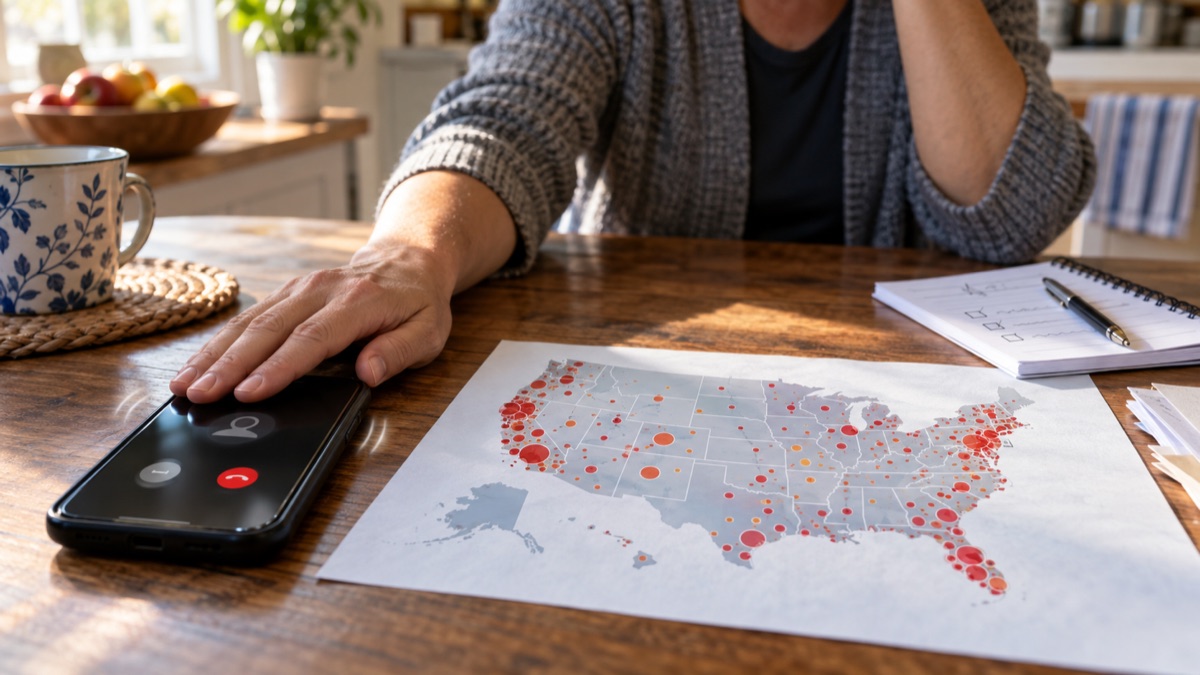
Arizona and Tennessee Led the Nation in Do Not Call Complaint Rates—But the Data Measure Reporting, Not Ringing
Arizona residents filed 1,028 National Do Not Call Registry complaints for every 100,000 people in fiscal 2025, the highest rate among the 50 states. Tennessee followed at 1,017. At the other end of the table, Hawaii recorded 393 complaints per 100,000—meaning Arizona’s reported rate was about 2.6 times Hawaii’s. Those figures provide a useful answer…
-

Do Corrections Travel Beyond the Original Article?
Last checked: August 7, 2026 A news organization can correct an article in seconds. Correcting every copy of that article is a different problem. The distinction matters because modern news does not remain on one webpage. A wire story may be copied into hundreds of customer systems. A photograph and its caption can be downloaded,…
-

The Hidden Arithmetic of a Long AI Conversation
Rates checked: August 6, 2026. Recheck vendor pricing before publication. Scope: API list-price illustration. Consumer subscriptions and enterprise contracts can be priced differently. A 100-message conversation with an artificial-intelligence model does not necessarily cost the same as 100 separate questions. The difference is context. To answer the latest message coherently, an AI service may send…
-

How Long Do Federal Vehicle-Defect Investigations Take? A 10-Year NHTSA Baseline
A vehicle owner can file a safety complaint in minutes. What happens afterward may take months or years—and the public data does not support a simple stopwatch from one complaint to one recall. To establish a useful baseline, we analyzed closed National Highway Traffic Safety Administration defect investigations with opening dates from 2016 onward. After…
-

When “Patch Now” Means Three Days: What 1,661 Exploited Vulnerabilities Reveal About Federal Deadlines
Security warnings routinely use urgent language. The federal government’s Known Exploited Vulnerabilities catalog provides something more concrete: a date by which civilian agencies must complete the required action. A USA Times analysis of all 1,661 entries in the Cybersecurity and Infrastructure Security Agency catalog available on August 6, 2026 found that the typical deadline was…
-
Does Claude Refuse Too Much? What’s Actually Documented About Over-Caution and Argumentativeness in Anthropic’s AI
A news-analysis look at the documented evidence behind complaints that Claude over-refuses benign requests — benchmark data, Anthropic’s own published admissions, and where the evidence runs thin.
-
Opinion: I Asked Claude to Save a Password. It Said No — Repeatedly. Here’s What That Taught Me About Where AI Assistants Draw Their Lines.
A personal account, by USA Times Executive Editor Achir Kalra, of Claude’s repeated refusal to persist a WordPress credential across sessions — and what that friction reveals about how different AI assistants handle live production credentials.
-
Claude Promised to Drop a False Safety Alarm. It Kept Bringing It Back.
Screenshots reviewed by USA Times show Anthropic’s assistant repeatedly interrupting unrelated work with self-harm guidance after a user explained that the source was a random Polish-language Reddit image. The exchange documents a costly form of AI over-caution—but does not reveal which part of Anthropic’s system caused it. By USA Times Staff A routine translation request…