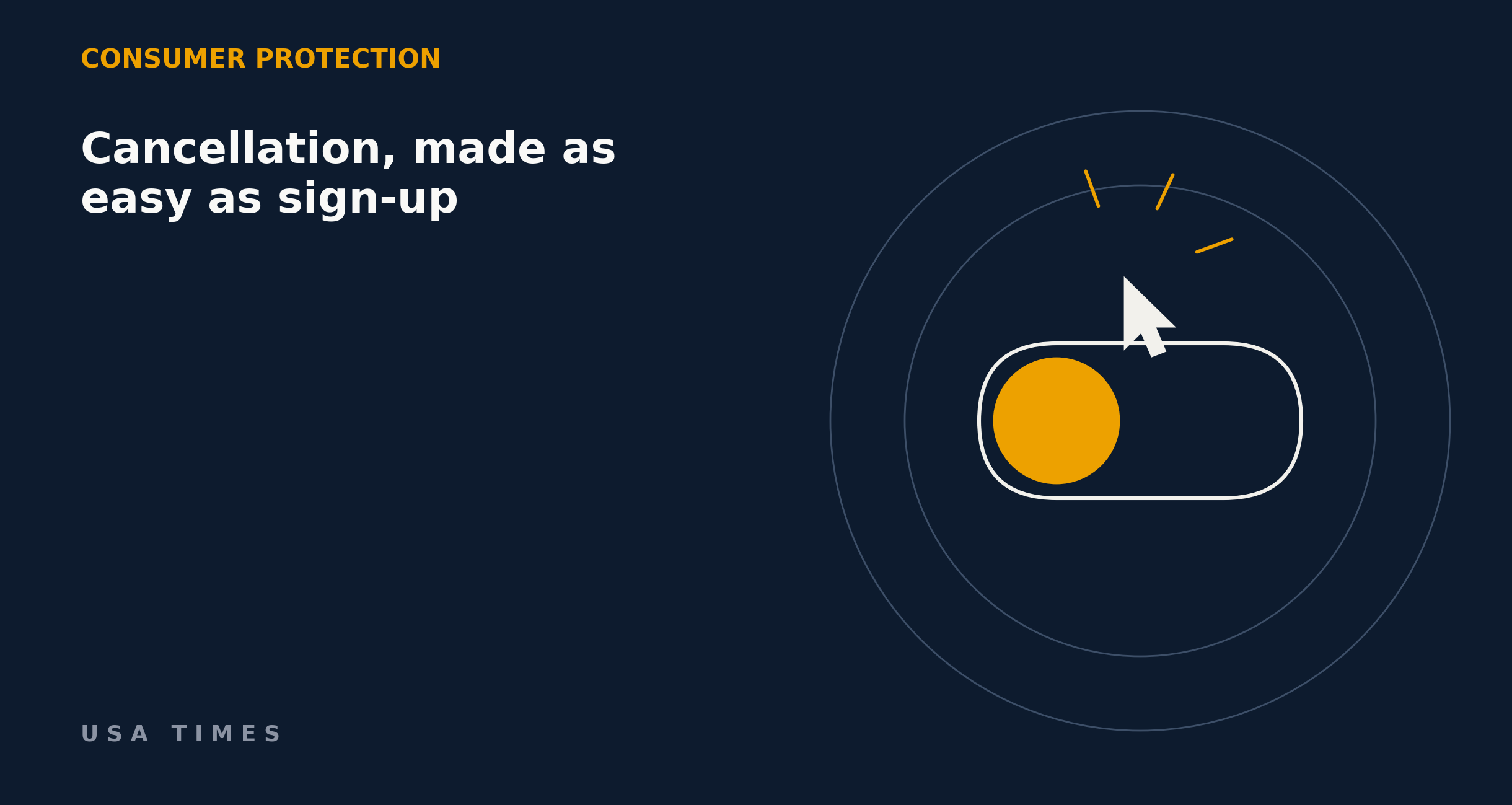
New York City’s Department of Consumer and Worker Protection has adopted a rule requiring businesses to let customers cancel subscriptions and recurring charges as easily as they signed up for them. Mayor Zohran Mamdani announced the final, adopted rule on July 10; it takes effect October 1 and applies citywide to automatic-renewal and continuous-service subscriptions, from gym memberships to streaming platforms.
Background: the policy’s timeline
In January, within his first weeks in office, Mamdani signed an executive order directing city agencies to address what the order called “subscription tricks and traps.” In February, DCWP issued citywide compliance warnings to nearly 200 gyms the agency said were violating existing rules on subscription cancellation. In April, Mamdani and DCWP Commissioner Sam Levine announced a proposed “click-to-cancel” rule and opened it to public comment. On July 10, the administration announced the rule had been adopted in final form.
Batmandir · The Circle Full access to theatres, museums & exhibitions. S2 · ongoing membership, without a Founder’s seat. Explore membership →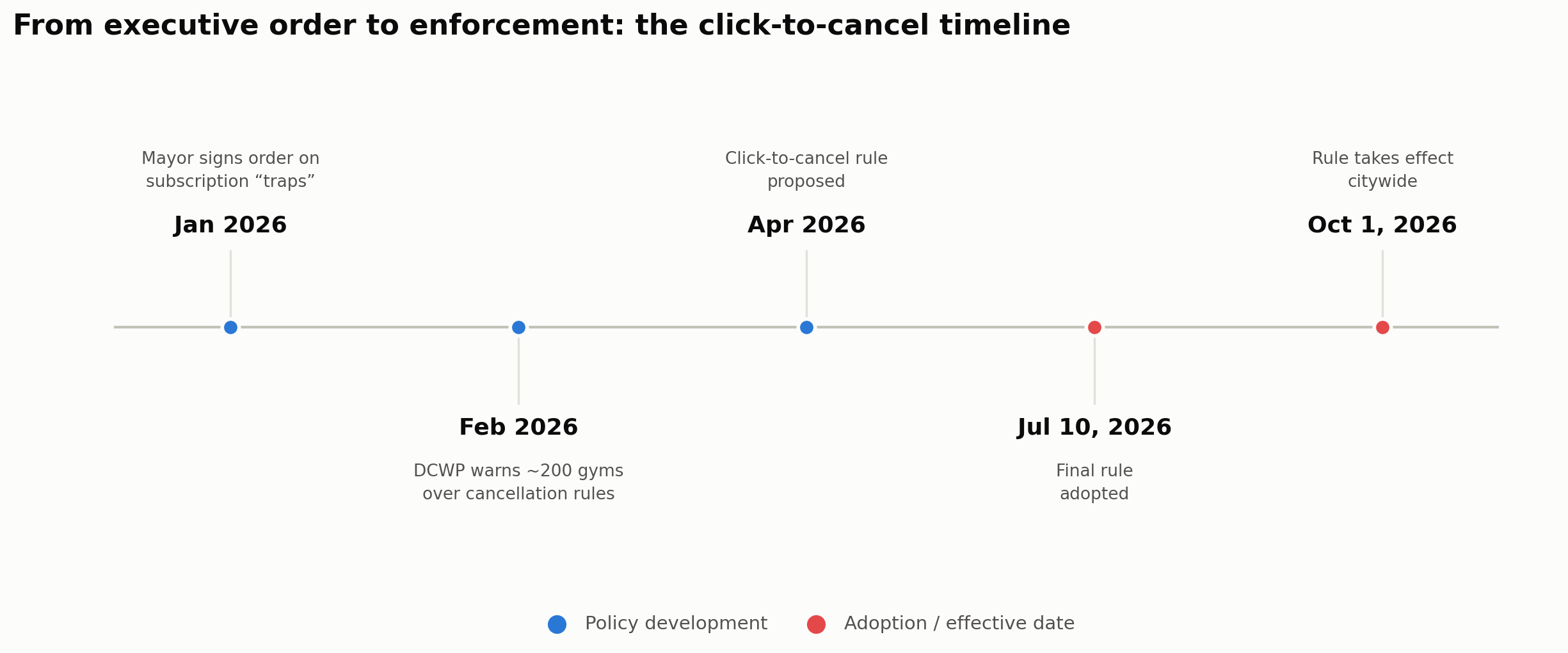
What the rule requires
The rule’s central requirement is what officials describe as symmetry between sign-up and cancellation: if a business allows customers to enroll in a subscription through a particular method — for example, a single click online — it must offer a similarly simple method to cancel. The rule also requires businesses to clearly disclose subscription terms, including renewal and cancellation rights, at the time of sign-up. It covers automatic-renewal and continuous-service offers across industries, including gyms, streaming services, and other digital subscriptions.
“If you can sign up with one click, you can cancel with one click,” Mamdani said when announcing the rule.
At a glance
| Effective date | October 1, 2026 |
| Enforcing agency | NYC Department of Consumer and Worker Protection (DCWP) |
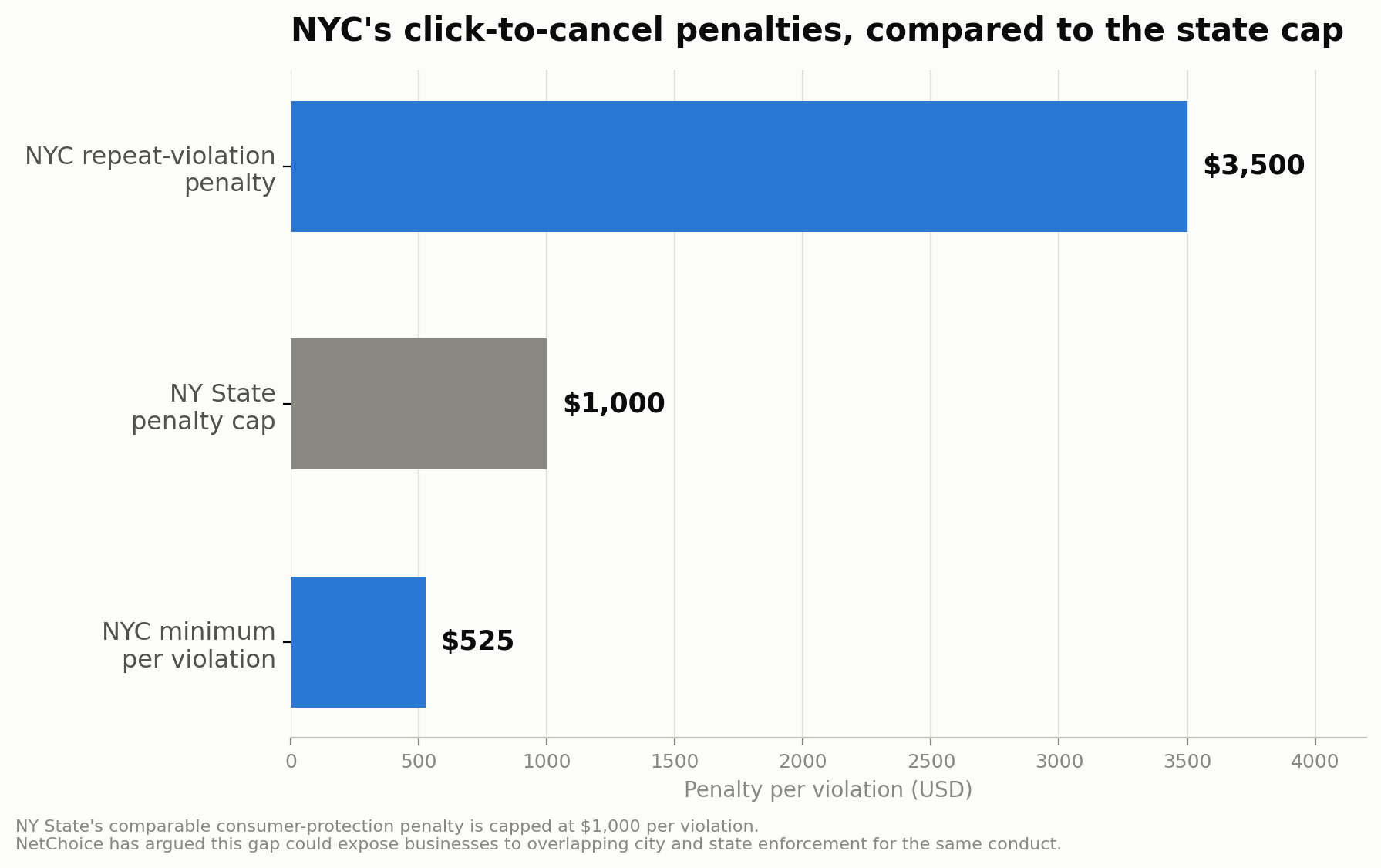
| DCWP penalty, per violation | $525 minimum; up to $3,500 for repeat violations |
| NY State comparable penalty cap | $1,000 per violation |
| Estimated annual consumer savings | $21.5 million–$162.5 million (Roosevelt Institute estimate) |
| Coverage | Automatic-renewal and continuous-service subscriptions citywide |
Enforcement
DCWP has citywide authority to enforce the rule. According to legal analyses of the rule and industry testimony, penalties start at $525 per violation and can rise to $3,500 for repeat violations, in addition to potential restitution to affected consumers. New York State’s existing consumer protection framework caps comparable penalties at $1,000 per violation; NetChoice, a technology industry trade group, has argued this creates the possibility that businesses could face separate enforcement action from both DCWP and the state Attorney General’s office for the same conduct.
The rule’s connection to a vacated federal rule
DCWP Commissioner Sam Levine previously worked at the Federal Trade Commission, where he was involved in developing the FTC’s own “click-to-cancel” rule, finalized during Lina Khan’s tenure as FTC chair. That federal rule was vacated by the U.S. Court of Appeals for the Eighth Circuit in 2025 on procedural grounds, after advertising, entertainment, and pay-TV industry groups sued to block it. Mamdani appointed Levine to lead DCWP in December 2025. City officials and outside observers have described the New York City rule as the first municipal click-to-cancel regulation in the country.
Estimated impact
The Roosevelt Institute, a policy research organization, has estimated the rule could save New York City consumers between $21.5 million and $162.5 million annually; the estimate has been cited by multiple outlets covering the rule, sometimes rounded to approximately $160 million. This is a third-party estimate rather than a city-produced figure, and actual savings would depend on the rule’s enforcement and on how businesses change their practices in response.
Reactions
The rule has drawn both support and opposition:
- The Consumer Federation of America and the National Association of Consumer Advocates have both publicly backed the rule.
- Lina Khan, the former FTC chair under whom the federal click-to-cancel rule was finalized, has said subscription traps are “predatory tactics” that “cheat people out of billions of dollars each year.”
- New York Attorney General Letitia James has urged New Yorkers to make use of the rule once it takes effect.
- NetChoice testified in opposition to the rule during the city’s rulemaking process. The group has argued the rule could restrict businesses from presenting discount or retention offers during cancellation — offers it says a significant share of customers want to see — and that requiring a separate, city-specific cancellation system could burden smaller businesses’ engineering resources and potentially lead some companies to limit services in New York City. NetChoice has also argued the rule duplicates existing New York State consumer protection requirements and creates conflicting penalty structures.
Supporters of the rule have pointed to the nearly 200 compliance warnings DCWP issued to gyms in February as evidence that existing state-level rules were not achieving consistent compliance before the city rule was adopted.
What happens next
The rule takes effect October 1. Businesses operating in New York City that offer subscriptions or continuous-service contracts will be required to comply with the cancellation-symmetry and disclosure requirements as of that date, subject to DCWP enforcement.
Sources
- Mayor Mamdani Announces Landmark “Click-To-Cancel” Consumer Protection Rules to Ban Subscription Traps and Junk Fees — NYC Mayor’s Office, July 2026
- Mamdani Administration Announces Landmark Consumer Protection Rules to Ban Subscription Traps and Junk Fees — NYC DCWP
- Mayor Mamdani, Commissioner Levine Announce First-In-The-Nation Municipal “Click to Cancel” Rule to End Subscription Traps — NYC DCWP, April 2026
- Mamdani Administration Issues Citywide “Subscription Trap” Compliance Warning to Nearly 200 Gyms — NYC DCWP, February 2026
- Mayor Mamdani Signs Executive Orders to Crack Down on Junk Fees, Subscription Tricks and Traps and Save New Yorkers Money — NYC Mayor’s Office, January 2026
- Cancellation of Subscriptions — NYC Rules, official adopted rule text and effective date
- New York City Enacts “Click to Cancel” Rule for Automatic Renewals and Continuous Services, Effective October 1, 2026 — JD Supra
- New York City’s “Click-to-Cancel” Proposal Signals a New Era in Subscription Regulation — Consumer Finance Monitor (Ballard Spahr)
- NYC’s first-in-the-nation ‘click to cancel’ rule will let customers exit subscriptions as easily as they sign up, saving residents $160 million yearly — includes Roosevelt Institute savings estimate and Lina Khan quote
- NetChoice Testimony in Opposition to NYC’s Click to Cancel Rule — NetChoice
- Mamdani taps Federal Trade Commission alum to lead DCWP — NY1, December 2025
- Consumer Alert: Attorney General James Urges New Yorkers to Take Advantage of New Click-to-Cancel Rule — Office of the NY Attorney General
Graphics: USA Times.