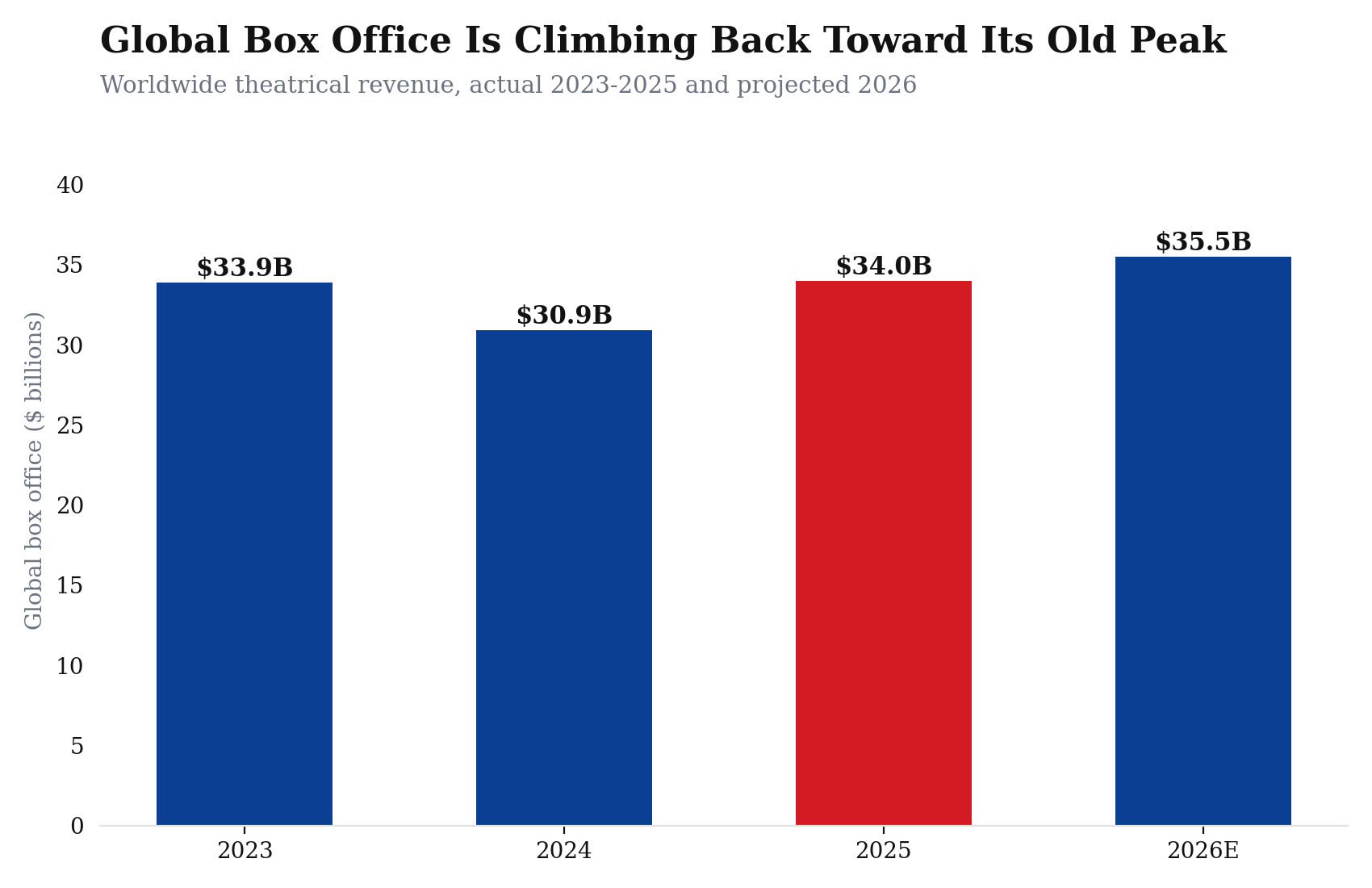
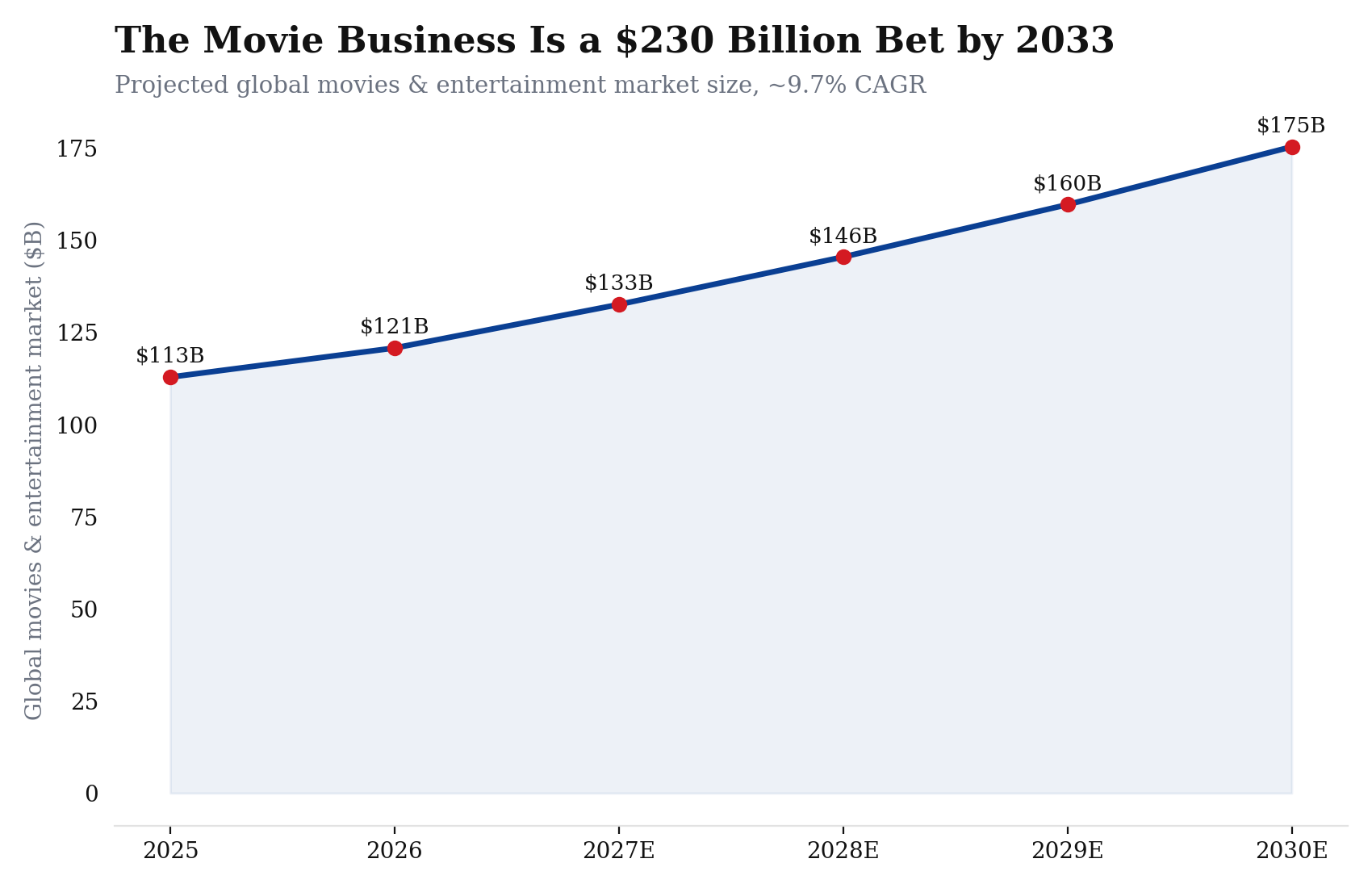
Global box office is climbing back toward the record levels it hit before the pandemic reshaped moviegoing — but the industry doing the climbing looks nothing like the one that fell. Worldwide theatrical revenue is on pace to top $35 billion in 2026, up from roughly $34 billion in 2025 and $30.9 billion in 2024, with the broader movies-and-entertainment market (theatrical plus streaming, licensing and home video) valued at $112.9 billion in 2025 and projected to more than double to $231.4 billion by 2033. The money is real and it’s growing. Who controls the largest slice of it has quietly stopped being a one-country story.
North America still leads, barely
North America held the largest single regional share of the 2025 movies-and-entertainment market at 33.9%, but Asia-Pacific is close behind at roughly 31% and closing the gap every year, powered by China and India’s combined production of more than 1,800 films annually and a fast-growing middle class buying tickets across the region. Europe, the Middle East and Africa together account for close to a quarter of global revenue, and Latin America — still the smallest region by share — is the one growing fastest off a low base.
The practical effect: a film’s U.S. opening weekend, once treated as the whole story, is now genuinely just one data point among several that determine whether a release is a hit. Studios increasingly build release strategies around China and India performance as a first-class consideration, not an afterthought layered on after the domestic run.
Batmandir · The Circle Full access to theatres, museums & exhibitions. S2 · ongoing membership, without a Founder’s seat. Explore membership →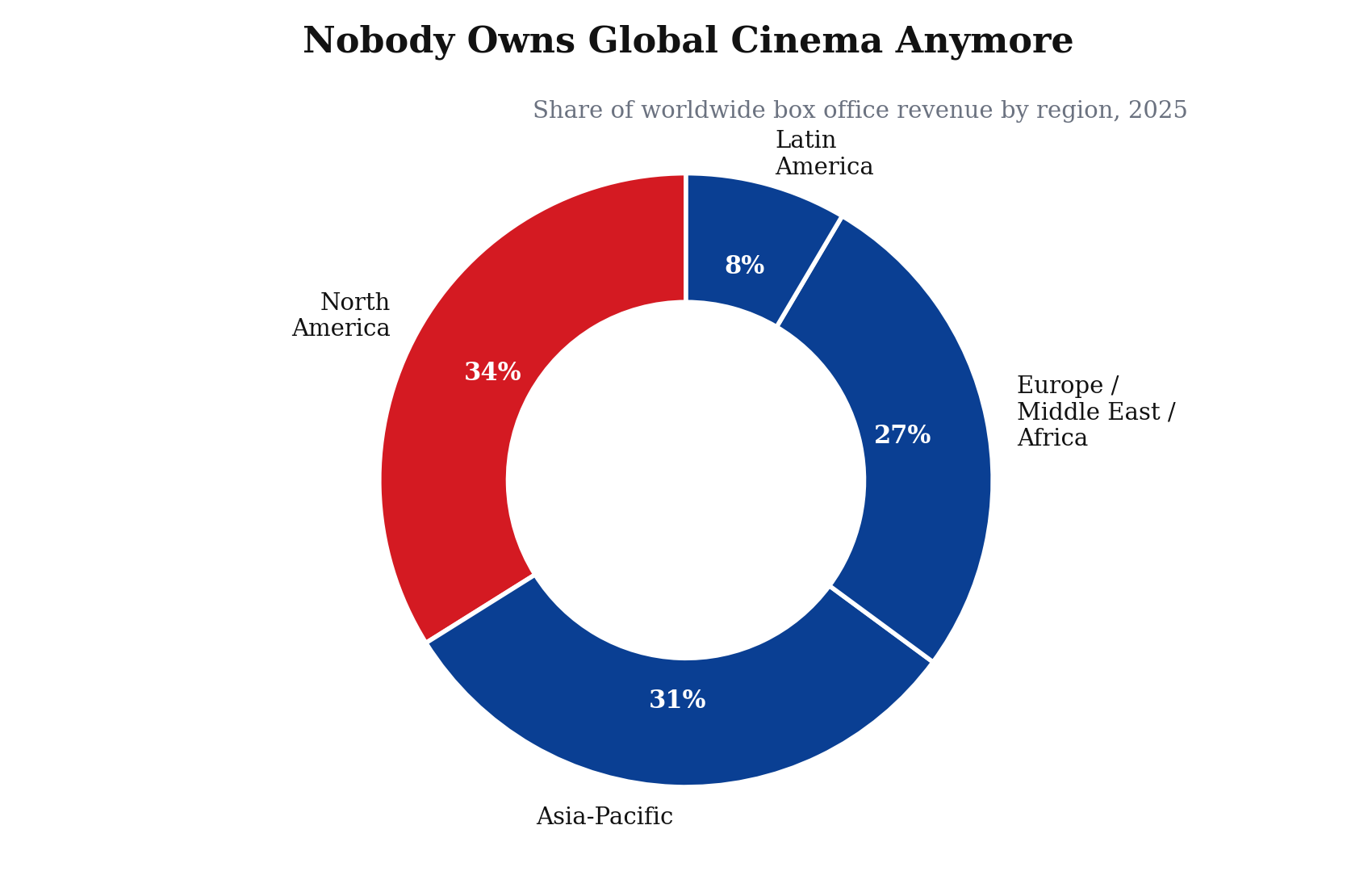
What’s actually driving the growth
Two forces are doing most of the work. The first is straightforward: IP-driven tentpole releases — franchise sequels, extended universes, established properties — continue to be the most reliable way to guarantee a global opening, and studios have leaned harder into that logic every year since 2020. The second is less obvious: original films are quietly proving there’s still a real audience for stories that aren’t sequels, provided marketing and distribution treat them with the same seriousness as a franchise release. Neither trend cancels the other out — the market is bifurcating into tentpoles that print money at scale and a smaller tier of originals that can still break out, with much less room left in between for the mid-budget films that used to fill theaters every weekend.
Underneath both is a technology shift that’s starting to show up in the budget line itself: virtual production, real-time rendering and AI-assisted visual effects are lowering the cost of the spectacle that tentpoles depend on, which is part of why studios can keep greenlighting bigger films even as overall theatrical release counts fall in markets like South Korea and, more gradually, the U.S.
The honest caveat on the growth numbers
Market-size projections this far out — especially the $231.4 billion 2033 figure — come from industry research firms extrapolating current growth rates forward for close to a decade, and forecasts of that length carry real uncertainty: currency swings, a single blockbuster year like 2025’s Ne Zha 2-driven surge in China, streaming-bundling economics, or another shock to theatrical attendance could all move the number meaningfully in either direction. We’re presenting the trajectory these firms are currently projecting, not a guarantee. The one number in this piece we’d put more weight on is the regional distribution shift — Asia-Pacific gaining share on North America is a multi-year pattern backed by production volume and demographic trends, not a single good quarter.
Sources: Grand View Research, Movies and Entertainment Market Size Report; IMDb/industry box-office estimates; Motion Picture Association domestic box-office data; regional trade press.