America’s Secret Society: Inside the Hidden World of Competitive Softball
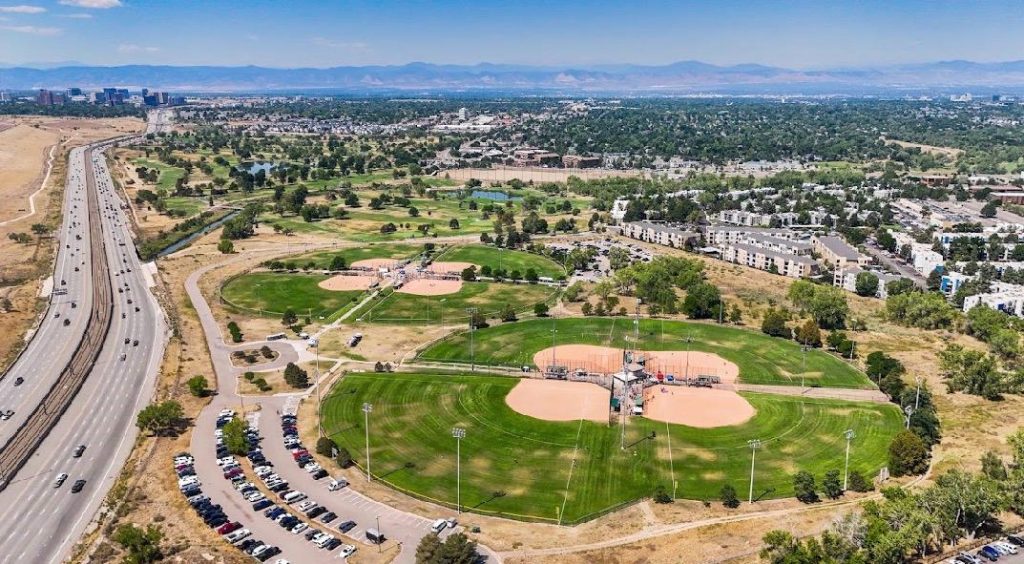
Photo: Charlie Sardelli
To an outsider walking in cold, competitive amateur softball looks simple enough: grown adults, a ball, some shouting, maybe a beer or two. Spend a weekend inside an IBEW Local 3 tournament, though, and that assumption falls apart fast.
What’s actually happening on those fields is a secret society.
A society with its own unwritten rules, its own rituals, and its own drinking games involving a cleat.
Batmandir · Founders A numbered seat at the table. S3 · The Founders Club — 161 seats per location. By invitation. Explore membership →The Heat Was Its Own Opponent
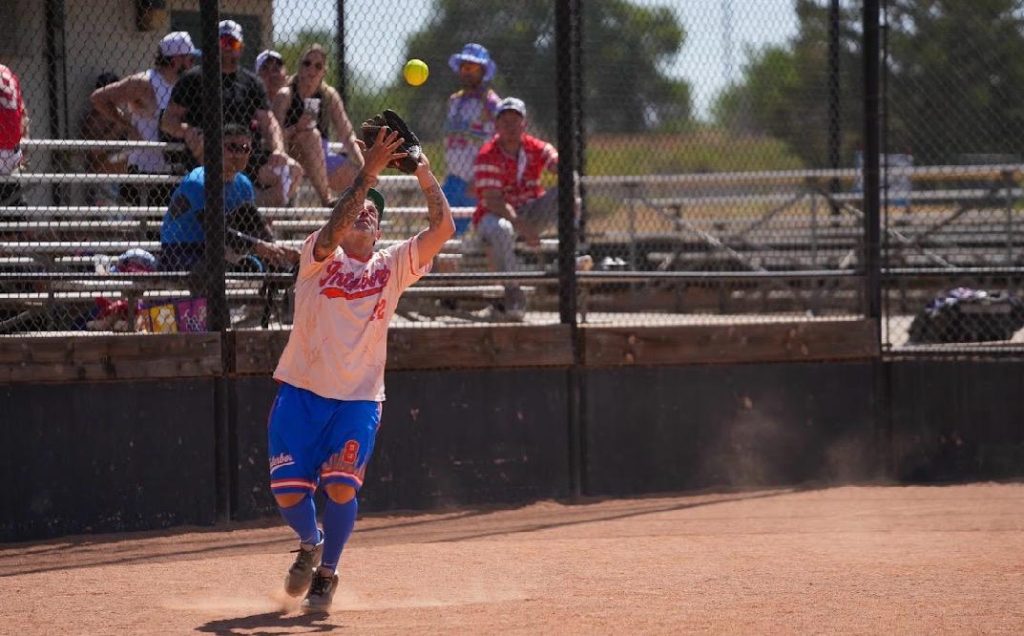
Photo: Charlie Sardelli
Let’s start with the obvious: Colorado in tournament season is brutal. The sun doesn’t so much shine as interrogate you. Grown men in full uniform, sprinting bases on baked dirt, sweating through jerseys that say “Local 3” across the chest like it’s a badge of honor — because to them, it is.
These guys just kept playing, inning after inning, like the heat was simply another team to beat.
It’s Not a League. It’s a Brotherhood.
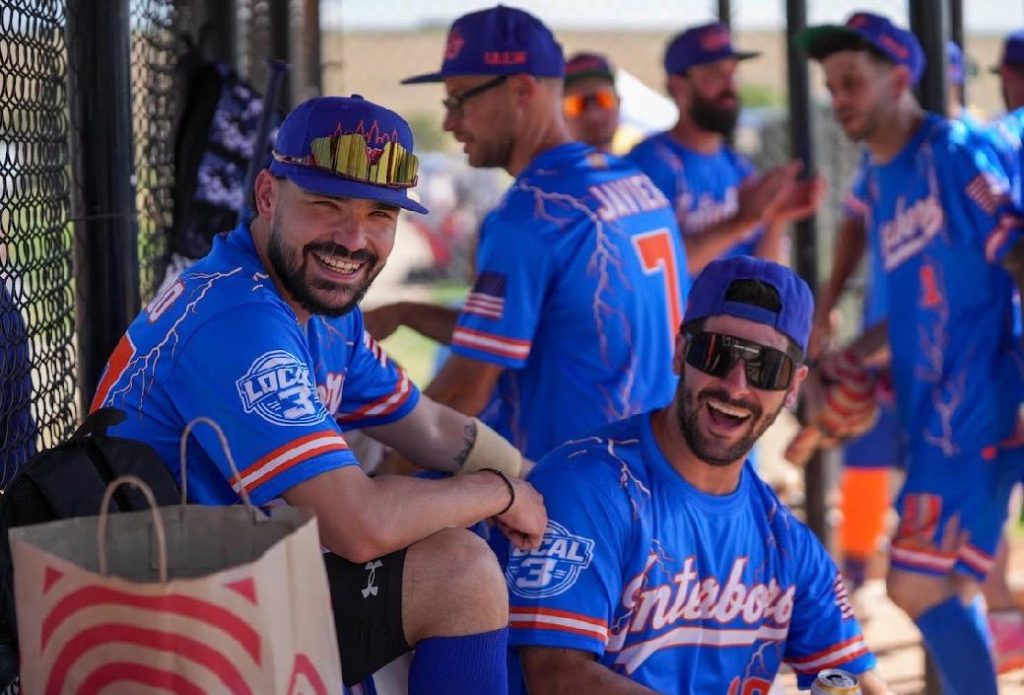
Photo: Charlie Sardelli
Here’s the thing about competitive rec-league softball that nobody tells you: it isn’t really about the softball.
Ask any player why they keep coming back and you get some version of the same answer. Dean Halloran Jr. put it best — most of these guys never play with each other back home. They play against each other. Different softball leagues, different lives, different states even. But once a year, they become teammates, and something clicks.
Andrew Javier called it “competing against other IBEW softball players and representing our team with our swag uniforms.” Joseph Lupo, more simply, said there’s “nothing like this brotherhood.” Frank Russo Jr. talked about wearing the jersey and letting “everybody know who Local 3 is.”
It’s a secret handshake disguised as a batting order.
The Rookies: Initiation by Cleat
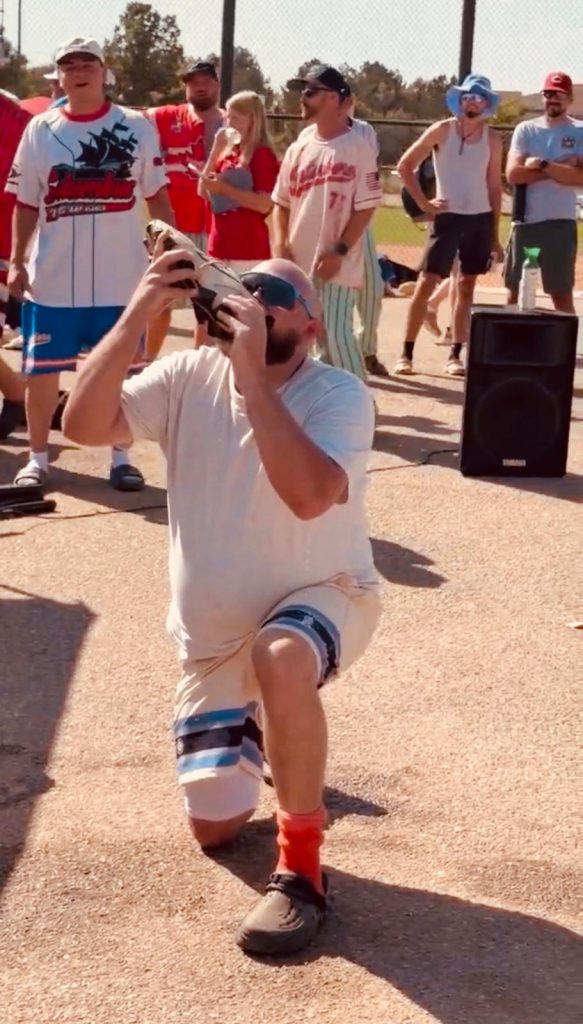
Every society has its initiation rites, and this one involves a cleat.
Three players were making their Midwest Tournament debut this year: Chris Vitale, playing DH; Thomas “Viv” Viverito, doing basically everything — outfield, pitcher, first base; and Rodney Castillo, also stepping in at first base for his first-ever tournament. Tradition dictates that first-timers earn their stripes the hard way: chugging a beer poured straight out of a cleat. No glass. No dignity. Just rubber studs and warm domestic light beer, in front of the entire team.
For Rodney, the initiation came with a bit of irony — the guy walked away from his rookie tournament with votes for Best Glove, arguably the highest compliment a defender can get from teammates. Not bad for someone still washing cleat foam out of his mouth.
Viv, for his part, sees the tournament as something deeper than a rookie hazing ritual — it’s a continuation of the game he thought he’d left behind. He played baseball through college, and once that chapter ended, his father told him he’d become “a glorified softball player.” With baseball gone from his life, being the best he can be on a softball field means the world to him now.
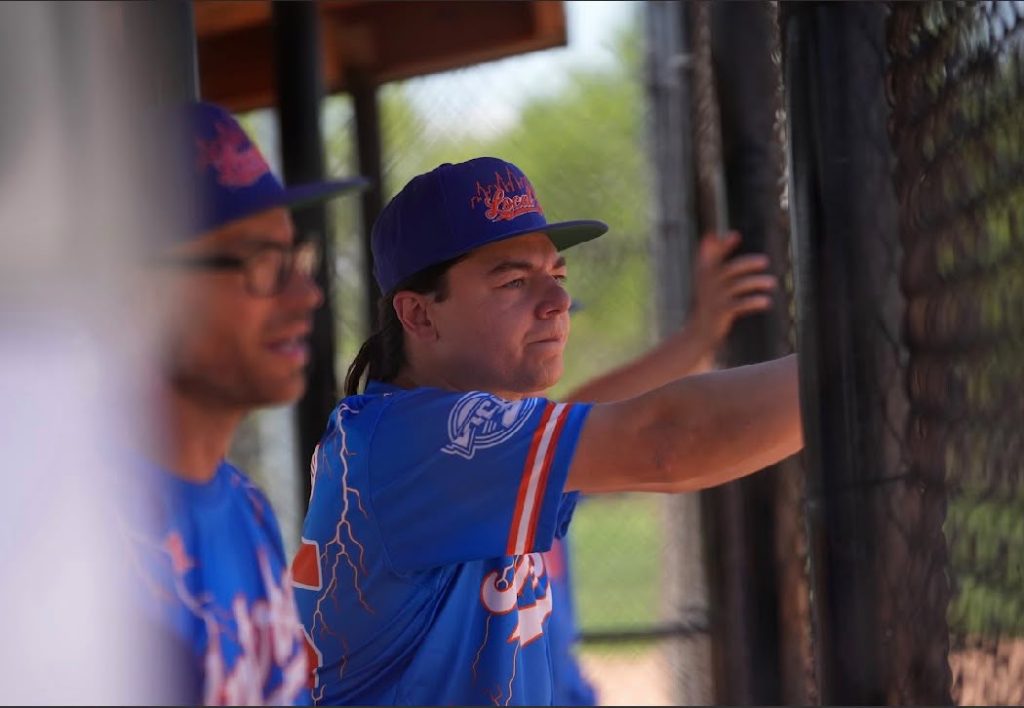
Photo: Charlie Sardelli
Chris Vitale, for his part, said playing Nationals “felt pretty good” — the chance to represent his union in a tournament like this is something he hopes to tell his future kids about someday. His favorite memory from the weekend wasn’t even his own: watching Viv strike out 8 batters and hit a game-tying grand slam in the same outing. And when asked what makes this team special, Chris didn’t hesitate — he talked about the chip on their shoulder. With four teams from New York in the field, he feels like his squad gets overlooked the most, and that’s exactly the point: they came to prove to the other Local 3 teams, and the rest of the tournament, that they mean business. He also had one of the weekend’s biggest cheerleaders in the stands — his mom, a flight attendant, flew out on her own time to watch him play.
The Money Nobody Talks About
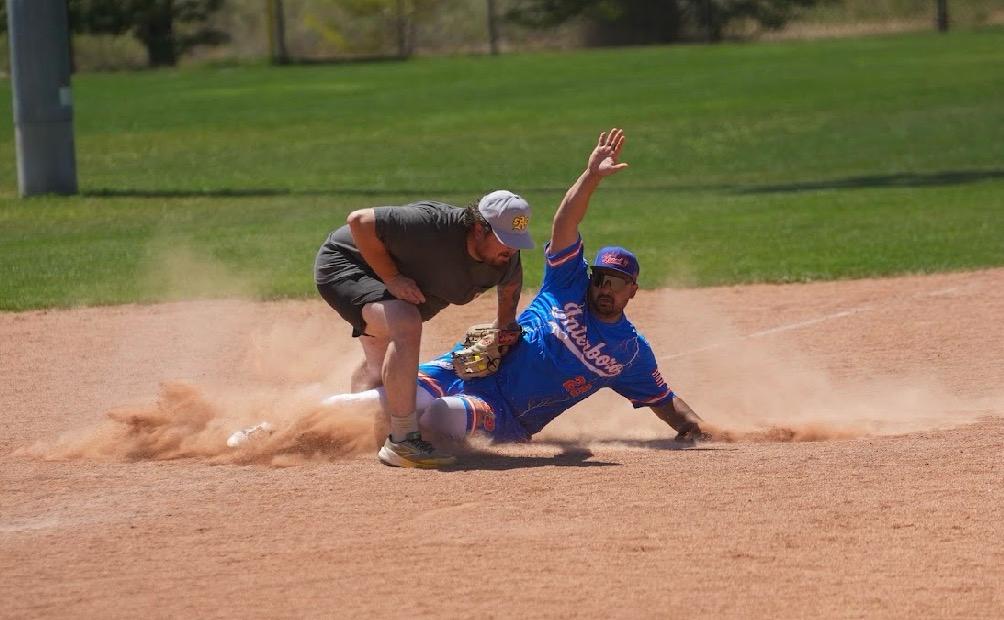
Photo: Charlie Sardelli
Here’s what most outsiders don’t expect: the sheer logistics bill behind American amateur sports.
These aren’t pros. They’re electricians. Union tradesmen who spend their actual careers doing wiring and voltage work, then pay out of pocket to fly across the country, book hotel rooms, rent cars, and eat tournament-week restaurant meals — all so they can play a game they love against people they respect. Add gear (more on that below), flights that aren’t cheap in tournament season, and the odd cleat-beer replacement fund, and you start to understand why “Team Dad” is an actual, seriously-voted category. Somebody has to keep the group organized and solvent.
The Most Voted (a.k.a. The Legends)
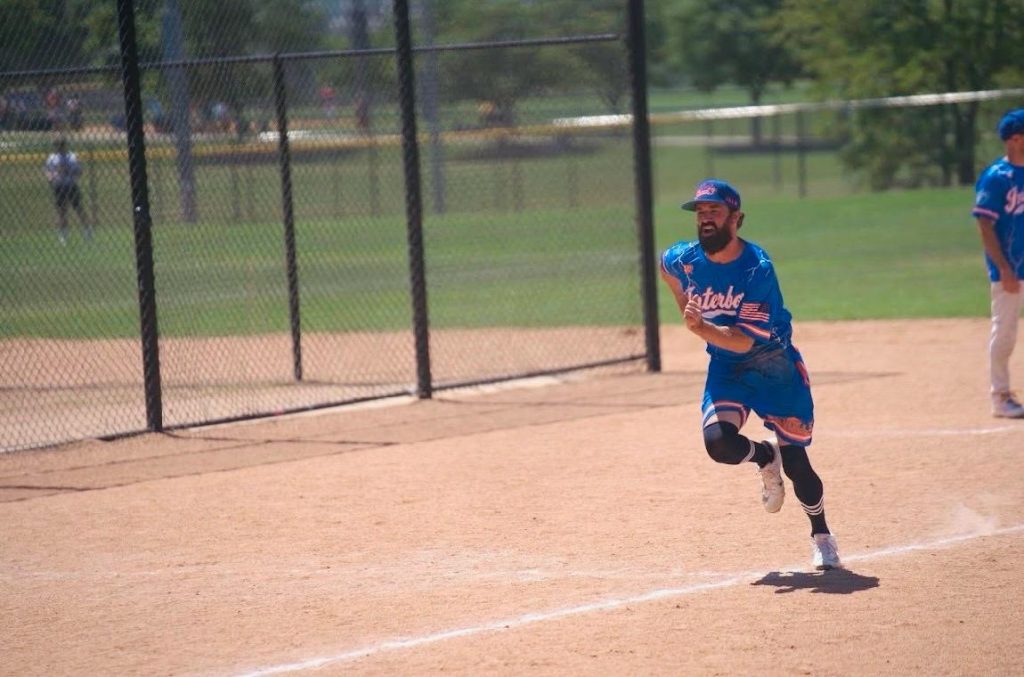
Photo: Charlie Sardelli
Every good secret society needs a hierarchy, and this team elects theirs by anonymous ballot after every tournament. The results were… consistent.
- Fastest Player: Shay Troy, in a unanimous landslide
- Team Dad: Andrew Javier, by a wide margin. The unofficial mayor of the group. Worth mentioning alongside him is Tyler, the team’s coach — the one pushing everyone hardest, on and off the field, to actually earn that Local 3 across their chest.
- Biggest Home Run Hitter and Biggest Gear Addict: Tommy “Viv” Viverito, sweeping both categories. Apparently the bats and gloves match the power numbers.
- Best Glove: Rodney Castillo, the clear fan favorite with leather.
- Most Likely to Buy the First Round: Tyler Rosario, a title he earned across nearly every ballot — softball’s version of a lifetime achievement award.
- Best Trash Talker: A tie between “Flip” (Felipe Martinez) and Anthony Soto, who, when asked to vote in that category, pointed out he couldn’t exactly vote for himself. Fair.
The Uniform Is Sacred
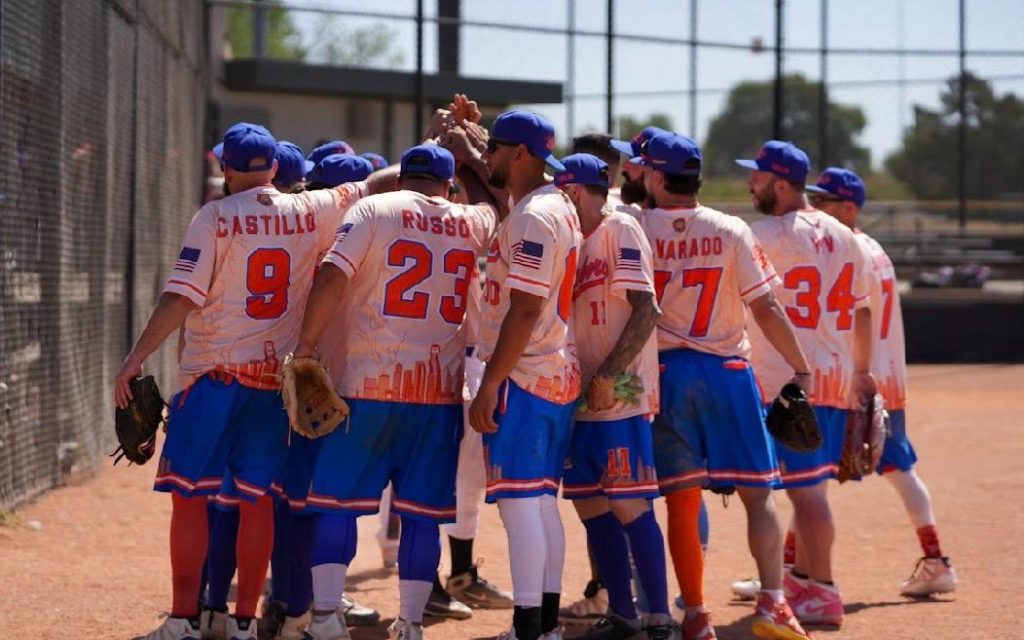
Photo: Charlie Sardelli
If you think this is “just a beer-league team,” look at the jerseys again.
These are not thrown-together t-shirts. Andrew Javier called them “swag uniforms” without a hint of irony — matching custom sets, numbers, the Local 3 name across the chest, styled like the team is one bad call away from a sponsorship deal. Anthony Soto talked about wanting to “rep your city in another state at high level competition” — and that starts with looking the part before you ever throw a pitch.
And then there’s the tradition that happens after the last out of the tournament: the jersey swap. By the final weekend, players are trading uniforms with guys from other IBEW locals and other teams entirely — a walking, breathing scrapbook of every crew they battled that week. It’s the softball equivalent of swapping shirts after a soccer match, except here it comes with a side of “we’ll see you again next year, brother.” Some guys come home with more opposing jerseys than their own — a quiet trophy case for a tournament that technically hands out none.
Fun Facts for the Uninitiated
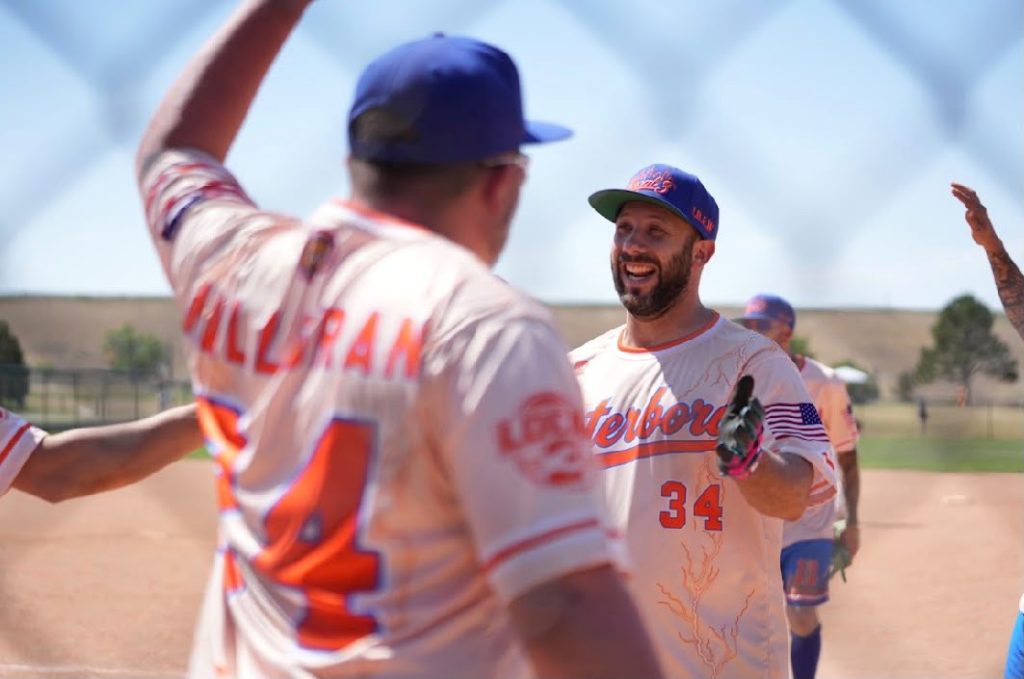
Photo: Charlie Sardelli
- Adult rec softball leagues estimate millions of players nationwide, many organized through union locals, workplaces, and church leagues — a whole underground network most outsiders never see.
- The “shooting the boot” tradition — chugging a drink from footwear — has roots in motorsport victory celebrations, and somehow made its way into the softball dugout.
- Softball was invented indoors, in Chicago, in 1887 — as a way to play baseball during brutal winters. There’s something poetic about this team now sweating it out in Colorado’s summer heat instead.
- A regulation softball is bigger than a baseball but travels the same brutal speeds off aluminum bats — which is why “biggest home run hitter” is a title people actually fear giving up.
- Custom team uniforms for a single tournament roster can easily run into the thousands of dollars once you factor in jerseys, matching hats, and warmup gear — all usually funded by the players themselves, not a front office.
- Jersey trading after tournaments is such a widespread ritual in amateur ball that some players show up with a spare “trade jersey” packed specifically to swap, the same way international soccer players stash extras for post-match exchanges.
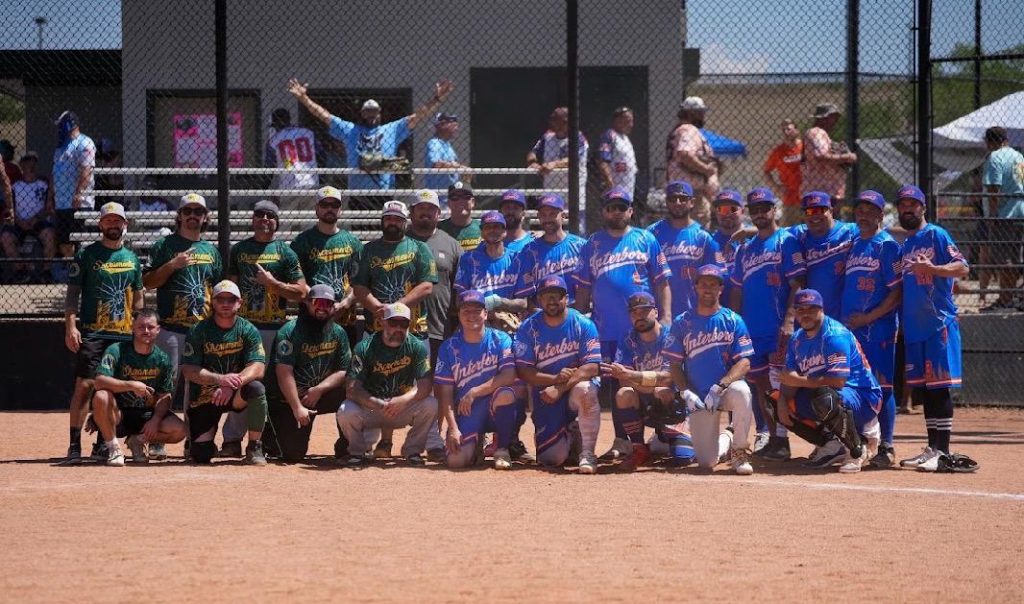
Photo: Charlie Sardelli
I didn’t grow up with this sport, and by the end of the weekend, I realized the game itself was almost beside the point.
What I witnessed wasn’t just softball.
It was a group of New York electricians spending their hard-earned money, using their vacation days, flying across the country, playing through sore muscles and exhaustion—not because anyone was paying them to, but because this was where they felt alive.
I watched them celebrate, tease each other relentlessly, laugh until they couldn’t breathe, and drink beer out of a cleat like it was sacred tradition.
They didn’t just call each other teammates. They called each other brothers.
Coming from Brazil, where soccer runs through everything, I didn’t think another sport could surprise me. But this was never really about softball. It was about belonging, loyalty, and a family you choose to show up for, year after year, no matter the miles between you.
Futebol has the world’s biggest stage. This little corner of America has something just as powerful: a community that turns a simple game into a lifelong bond.