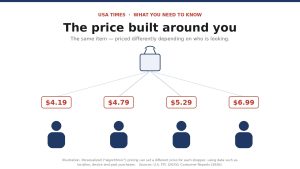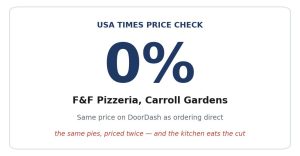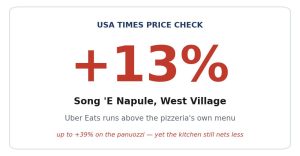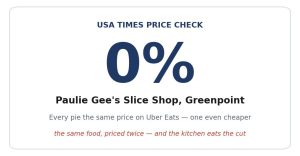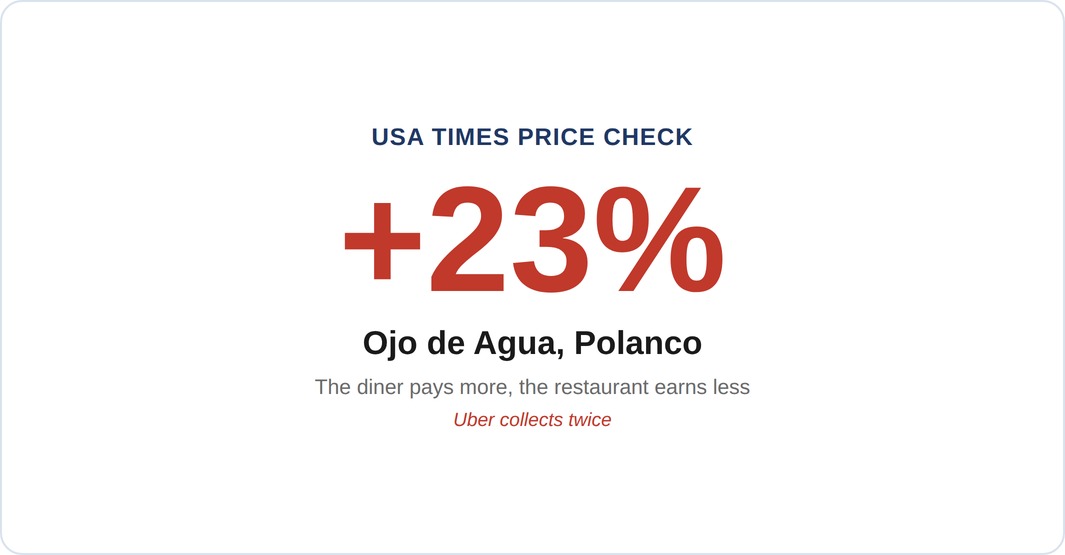
The double charge, in one line. Uber’s commission (hidden in the food price) and its service fee both pay for the same thing — Uber being the middleman. One toll, billed twice. The delivery fee is separate: that one pays the courier. Why Uber Eats won’t put it in one number →
A USA Times reporter ordered one fruit cup. It costs $85 pesos at the counter. Delivered, it came to $130.72 — and the restaurant made less money than if he had walked in.
OJO DE AGUA (Masaryk) — healthy / Mexican breakfast. Case study #2 in a USA Times series auditing Uber Eats pricing across 100 Mexico City restaurants. Prices compared against the restaurant’s current printed menu and its Uber Eats storefront, 14 July 2026.
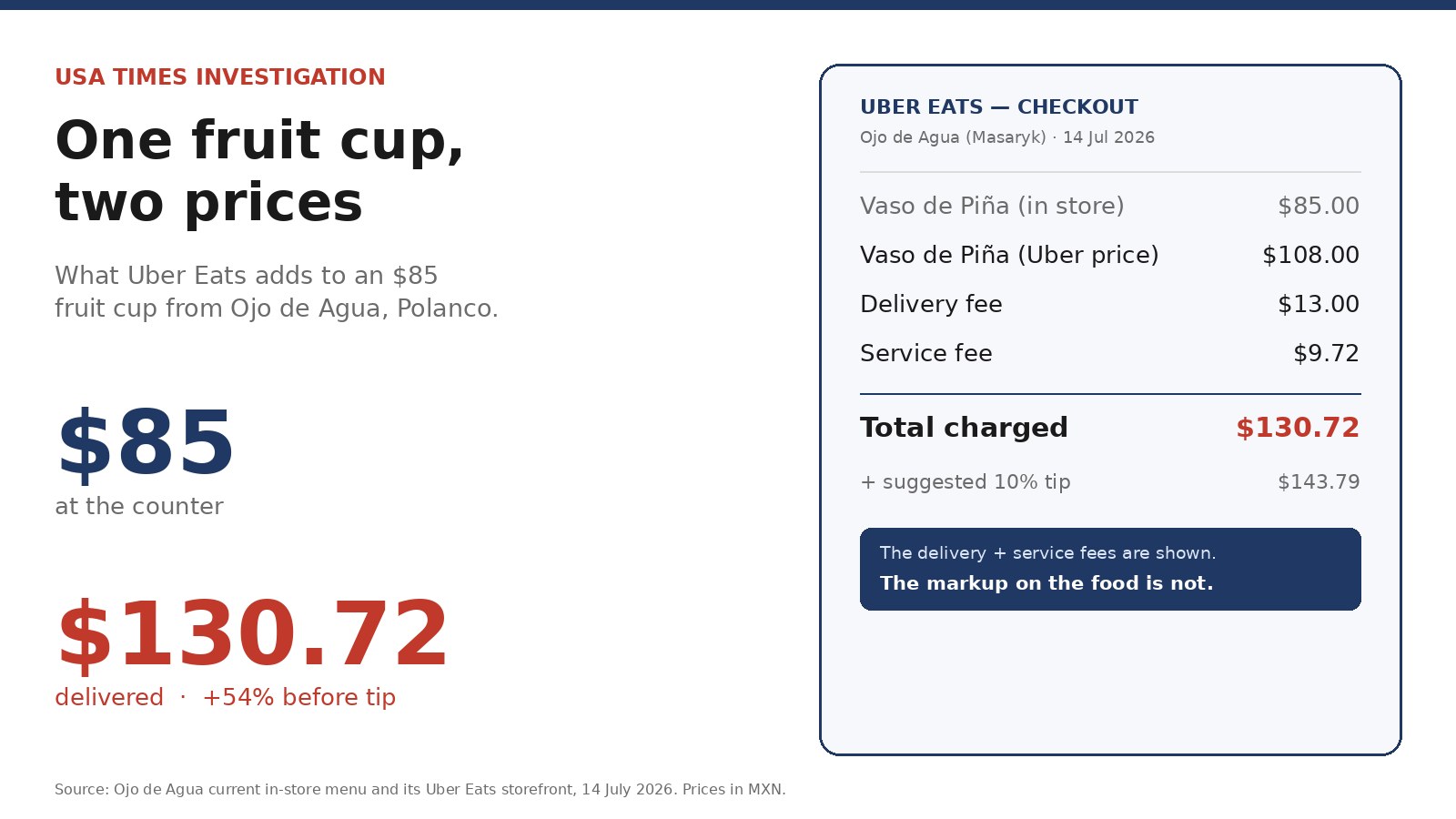
One receipt
A USA Times reporter placed a real order at Ojo de Agua on Avenida Masaryk. One item: a cup of pineapple. At the restaurant’s counter, a fruit cup costs $85 pesos. Here is what the checkout screen said:
| Fruit cup, at the restaurant | $85.00 |
| Same fruit cup, priced on Uber Eats | $108.00 |
| Delivery fee | $13.00 |
| Service fee | $9.72 |
| Total charged | $130.72 |
| Premium over the counter price | +54% |
| With the 10% tip Uber suggests by default | $143.79 — +69% |
The delivery fee and the service fee are visible. The $23 added to the fruit itself is not. Nothing on the screen indicates that the food has been repriced at all.
The restaurant is losing money on this
Here is the part we did not expect.
Across 13 dishes we could match between Ojo de Agua’s current printed menu and its Uber Eats storefront, the average markup was 22.8 percent. The median was 21.2 percent. That is a real increase, and the customer pays every peso of it.
But it is not enough. Uber Eats charges restaurants in Mexico a commission of roughly 25 to 30 percent of the order subtotal. For Ojo de Agua to simply end up with the same money it makes selling a dish at its own table, it would need to raise its in-app prices by about 43 percent. It has raised them by 23.
Which means that on every single dish we checked, the restaurant takes home less from a delivery order than from a walk-in:
| Dish | At the restaurant | On Uber Eats | Restaurant keeps, after a 30% commission | vs. counter |
|---|---|---|---|---|
| Roast Beef Mostaza Deli | $330 | $396 | $277 | −$53 |
| Hojas de Salmón y Uva | $315 | $374 | $262 | −$53 |
| Salmón Deli Nuez | $315 | $380 | $266 | −$49 |
| Chutney Mango Deli Pollo | $250 | $303 | $212 | −$38 |
| Chilaquiles con Pollo | $230 | $286 | $200 | −$30 |
| Molletes 3 Dientes | $205 | $259 | $181 | −$24 |
Ojo de Agua is absorbing part of Uber’s commission rather than passing all of it to the customer. It is eating roughly $37 a dish to keep its delivery prices from looking absurd.
And the customer is still paying 23 percent more for the food, plus a delivery fee, plus a service fee.
So who is winning?
Add it up. The diner pays more — 54 percent more, on the receipt above. The restaurant earns less than it would have from the same customer walking through its door. The courier receives the tip, and the delivery fee.
Uber takes its commission out of an inflated subtotal, then charges the same customer a service fee on top of it.
There is only one party to this transaction that ends up better off than if the customer had simply walked to Masaryk 76.
What Uber knows, and does not say
Uber does not set these prices. Restaurants do, and Uber will say so.
But Uber maintains a metric it reports to merchants called “Menu Markup” — a measurement of the gap between a restaurant’s in-store and in-app prices. Uber tracks this. It knows which restaurants mark up by 20 percent and which mark up by 50. It does not show that number to the person paying it, and nothing on the storefront hints that the menu price is not the menu price.
The full comparison
Every dish we could match. Mexican pesos. Restaurant prices from the current printed menu at Masaryk 76; Uber Eats list prices (excluding temporary promotions), captured 14 July 2026. Delivery and service fees are charged on top of all of them.
| Dish | Section | Restaurant | Uber Eats | Difference | Markup | Restaurant nets @30% |
|---|---|---|---|---|---|---|
| Hojas de Fresas y Serrano | Ensalada | $295 | $374 | +$79 | +27% | $262 (−$33) |
| Hojas de Tomate y Pollo | Ensalada | $295 | $374 | +$79 | +27% | $262 (−$33) |
| Hojas de Atún y Jengibre | Ensalada | $295 | $374 | +$79 | +27% | $262 (−$33) |
| Hojas de Romero y Pasta | Ensalada | $295 | $374 | +$79 | +27% | $262 (−$33) |
| Molletes 3 Dientes | Desayuno | $205 | $259 | +$54 | +26% | $181 (−$24) |
| Chilaquiles con Pollo | Chilaquiles | $230 | $286 | +$56 | +24% | $200 (−$30) |
| Chutney Mango Deli Pollo | Sándwich | $250 | $303 | +$53 | +21% | $212 (−$38) |
| Salmón Deli Nuez | Sándwich | $315 | $380 | +$65 | +21% | $266 (−$49) |
| Roast Beef Mostaza Deli | Sándwich | $330 | $396 | +$66 | +20% | $277 (−$53) |
| Clásico Pavo Deli Pesto | Sándwich | $220 | $264 | +$44 | +20% | $185 (−$35) |
| Enchiladas Suizas c/ Pollo | Desayuno | $230 | $275 | +$45 | +20% | $192 (−$38) |
| Avocado Trufa Toast | Desayuno | $210 | $250 | +$40 | +19% | $175 (−$35) |
| Hojas de Salmón y Uva | Ensalada | $315 | $374 | +$59 | +19% | $262 (−$53) |
| Dishes compared | 13 |
| Mean markup | 22.8% |
| Median markup | 21.2% |
| Range | 18.7% – 26.8% |
| Markup needed to match dine-in take at a 30% commission | 42.9% |
| Dishes where the restaurant nets less than dine-in | 13 of 13 |
| Average shortfall per dish | −$37 |
| For comparison: Swad Indian Restaurant (case study #1) | mean 29.8% |
Method
Restaurant prices were read from Ojo de Agua’s current printed menu at Masaryk 76, photographed on 14 July 2026. Uber Eats prices were taken from the Masaryk storefront in delivery mode on the same day. The fee figures come from an actual completed checkout, not an estimate.
Ojo de Agua and Uber have both been contacted for comment.
Do you run a restaurant on a delivery platform? Tell us what you actually net. achir@usatimes.com
This report is part of a USA Times series auditing food-delivery pricing. Prices were collected by USA Times on the date noted, compared item by item against the restaurant’s own current menu, and reviewed by an editor before publication.