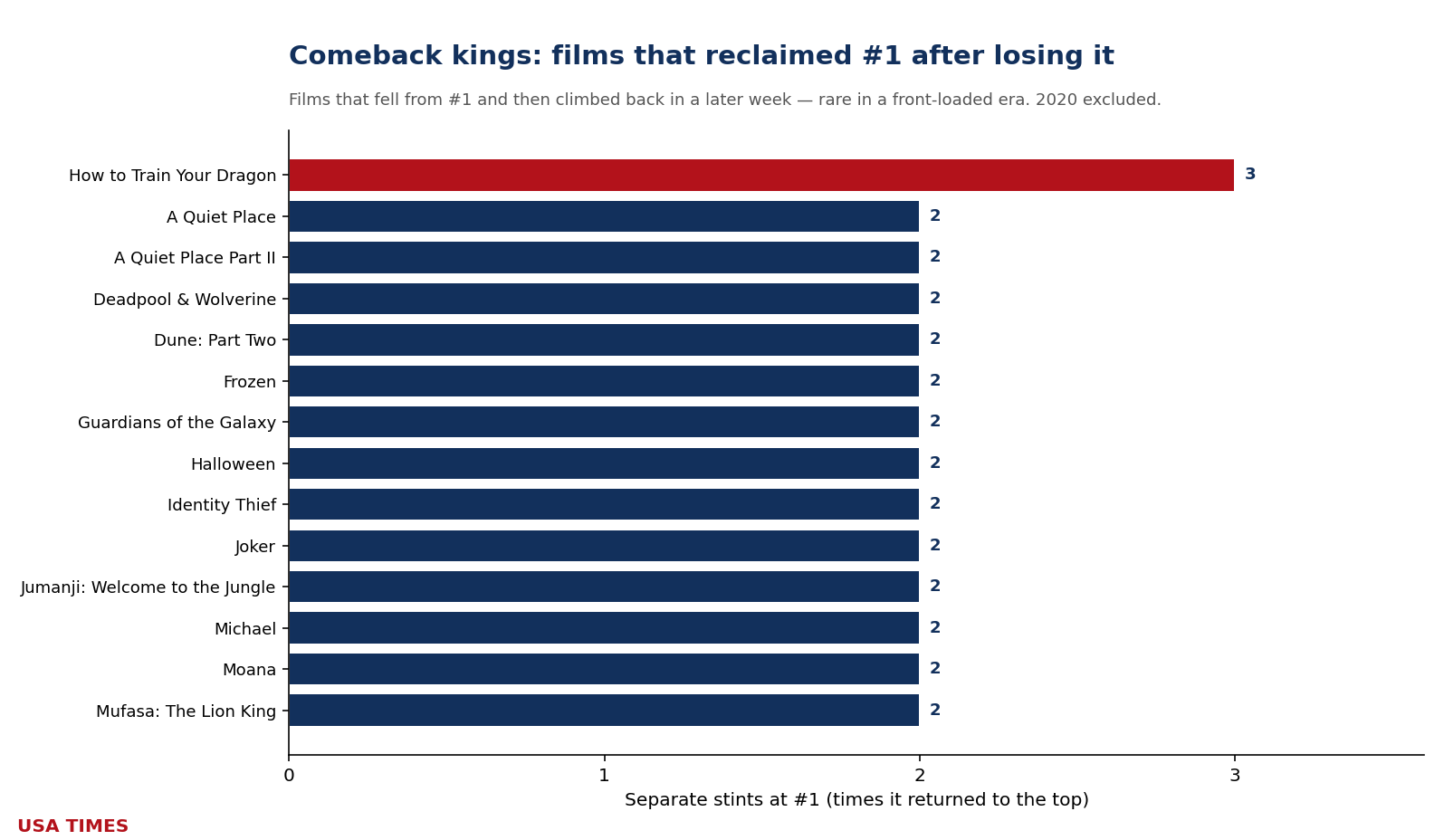
In the modern box office, losing the top spot is usually permanent. The release calendar is a conveyor belt of giants, each shoving the last off the throne within a week, and almost no film ever climbs back on. That is what makes the comeback so rare and so satisfying: a movie that surrenders #1, waits, and then retakes it — beating not just the film that dethroned it, but the natural gravity of a market built for turnover. Over twenty years, only 22 films managed it.
How a movie climbs back on the throne
There are really only two ways to pull it off. The first is word of mouth: a film opens well, slips to second as a new release arrives, and then claws back as audiences who loved it tell everyone they know — outlasting the flash of the film that briefly beat it. The second is the calendar: a holiday tide, especially the stretch between Thanksgiving and New Year’s, can lift a strong holdover back above the week’s new arrivals as family audiences pour in.
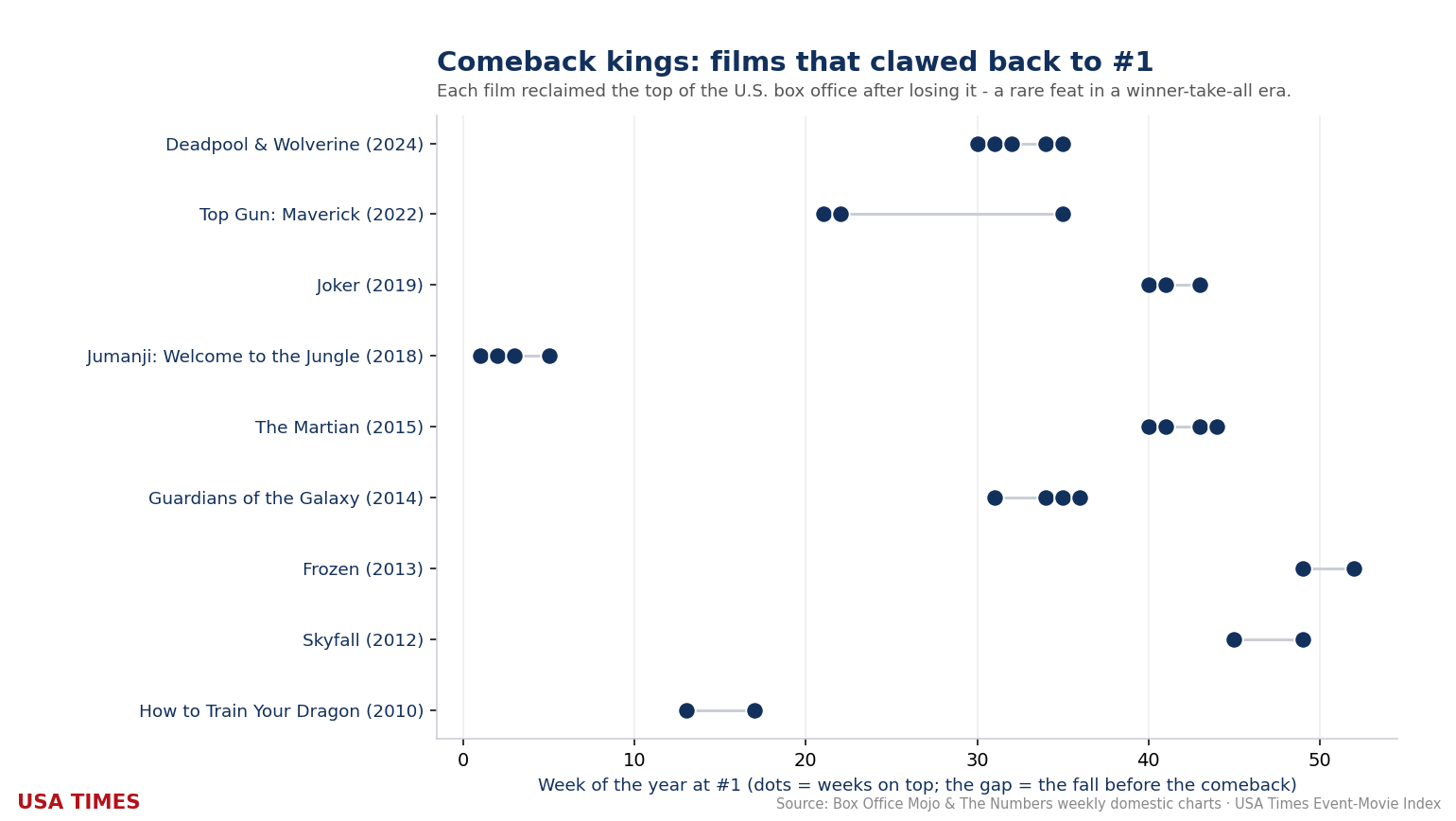
The chart above tells the story visually. Each dot is a week a film spent at #1; the gap between dots is the fall it had to recover from. Guardians of the Galaxy in 2014 is the model case — it led, dropped off, and then reclaimed the top for three straight weeks on the strength of a summer word-of-mouth surge. Frozen rode the Christmas tide back to #1 to close out 2013. These are not flukes so much as evidence of genuine staying power — the box-office equivalent of a boxer getting off the canvas.
| Film | Year | Weeks at #1 | Longest gap before return |
|---|---|---|---|
| How to Train Your Dragon | 2010 | 2 | 3 wk(s) |
Skyfall | 2012 | 2 | 3 wk(s) |
| Frozen | 2013 | 2 | 2 wk(s) |
| Guardians of the Galaxy | 2014 | 4 | 2 wk(s) |
| The Martian | 2015 | 4 | 1 wk(s) |
| Jumanji: Welcome to the Jungle | 2018 | 4 | 1 wk(s) |
| Joker | 2019 | 3 | 1 wk(s) |
| Top Gun: Maverick | 2022 | 3 | 12 wk(s) |
| Deadpool & Wolverine | 2024 | 5 | 1 wk(s) |
A feat that is getting harder
The comeback is also a casualty of the concentration story this index keeps uncovering. As the calendar has filled with back-to-back mega-releases, the window for a holdover to climb back has narrowed to almost nothing — there is always another giant opening next week to slam the door. The comebacks that do happen now tend to cluster in the holiday corridor, the one stretch of the year when studios deliberately leave a little room and family audiences reward the films that earned their loyalty.
It is worth a caveat: our measure tracks the #1 film week by week, so a comeback here means reclaiming the literal top spot, not merely holding steady. A film can have tremendous legs and never technically “come back” if it simply never fell to second in the first place. But that is exactly why the list is short and the names on it are memorable. To come back, you first have to fall — and then be good enough, or beloved enough, that the audience carries you back up. In a business engineered for disposable domination, that remains one of the hardest things a movie can do.