Somewhere in the last decade, the two-hour movie stopped being an event and became the default. Audiences noticed, critics complained, and the trend kept climbing anyway. It is natural to ask whether there is a “right” length for a film — a mathematically ideal runtime that respects both the story and the human bladder — and just as natural, on this site, to wonder whether the golden ratio has an opinion. It does not, really. But the question is a good excuse to look at what the data actually says.
The numbers are real, and they’re climbing
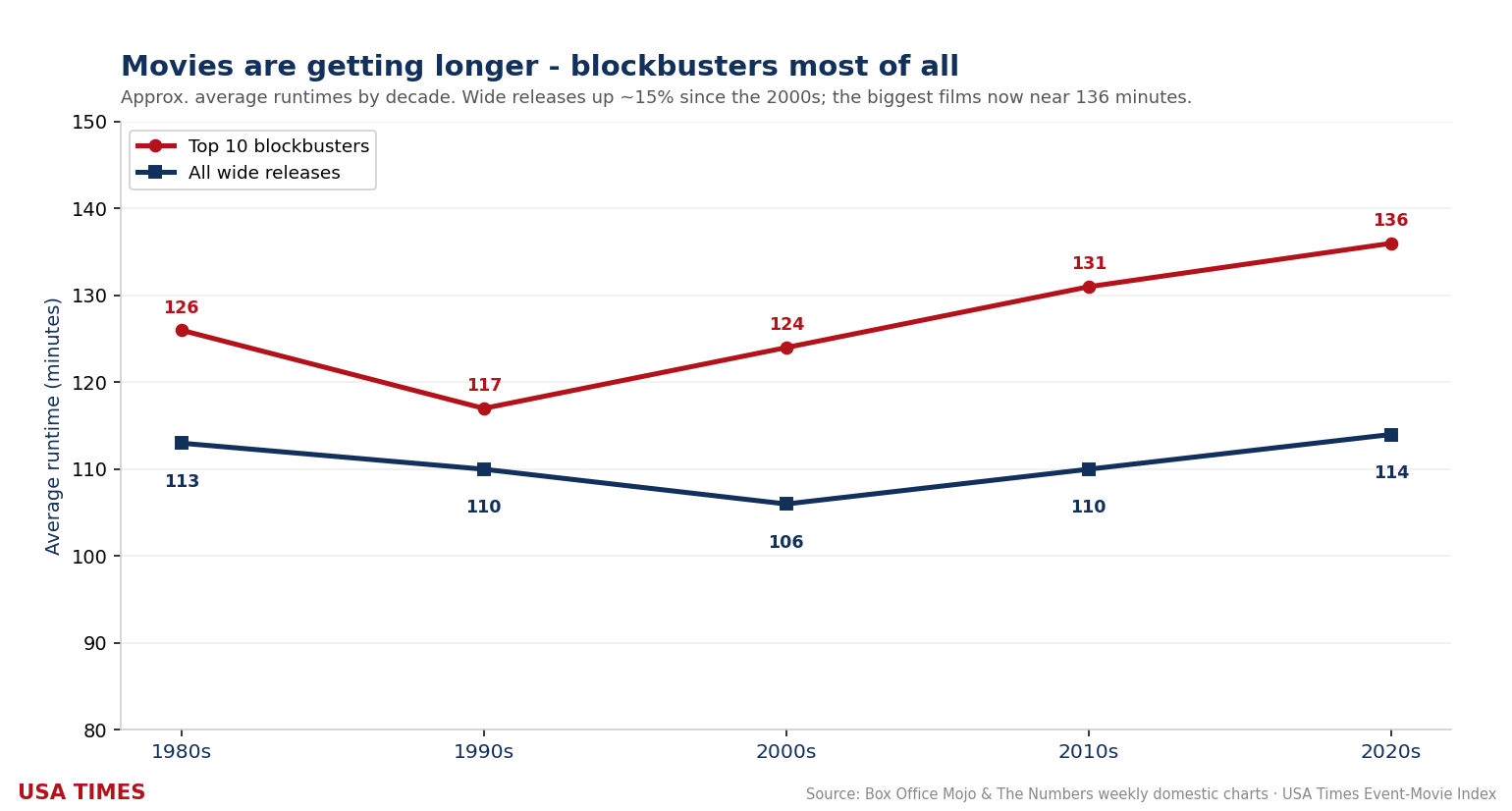
This is not a nostalgic illusion. Wide theatrical releases averaged about 106 minutes in the early 2000s and roughly 114 minutes by the 2020s — the longest of any decade on record, about 15% up from the lean 1980s. The inflation is steepest at the top: the ten biggest films of recent years have averaged around 136 minutes, and action films specifically have added some 25 minutes over a few decades. In the 1980s, 14% of wide releases ran past two hours. In the 2020s, it is 32% — nearly one in three.
The reasons are structural, not artistic. Streaming rewired expectations: when a “prestige” film signals importance through length, and when a trip to the theater has to feel worth the ticket and the babysitter, more minutes read as more value. Franchises carry ever-larger casts and mythologies that demand screen time. And powerful directors, freed by their box-office clout, increasingly get final cut on epics that once would have been trimmed. Length has become a signal of ambition — sometimes earned, sometimes merely indulged.
Batmandir · Founders A numbered seat at the table. S3 · The Founders Club — 161 seats per location. By invitation. Explore membership →Is there a golden runtime?
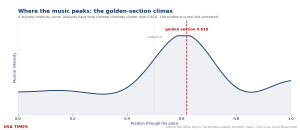
Here is where we disappoint the numerologists. There is no evidence for a magic ideal runtime, golden or otherwise. You can play the game — the golden ratio times 90 minutes lands around 145 minutes; a “golden” act structure would put the climax of a 120-minute film at the 74-minute mark — but these are parlor tricks, not findings. Attention and enjoyment do not collapse at a specific decimal. What research on audiences and pacing does suggest is gentler and more useful: comprehension and satisfaction hold up well as long as a film earns its length, and sag when it doesn’t, regardless of the exact minute count.
If there is a “sweet spot,” it is a broad and genre-dependent one. Comedies live and die on momentum and rarely benefit from passing 100 minutes. Horror is often sharpest under 105. Epics and character dramas can justify three hours if every scene pulls weight — and feel interminable at two if they don’t. The variable that matters is not duration but density: how much story, feeling, or spectacle each minute delivers. A tight 140-minute film flies; a flabby 95-minute one drags.
The real cost of the creep
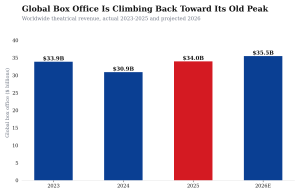
Ballooning runtimes are not just an aesthetic gripe; they have box-office consequences the rest of our index feels directly. A longer film means fewer daily showings per screen, which caps how much money even a Geuse can make in a weekend — a three-hour epic simply cannot turn over as many seats as a 100-minute crowd-pleaser. Exhibitors quietly resent it, and it is one hidden reason a shorter, sharper hit can sometimes out-dominate a longer, bigger one in share of a given week.
So the honest answer to “is there an ideal runtime” is: no fixed number, but a clear principle. Make the film as long as its story genuinely needs and not a minute longer. The golden ratio can’t tell you where that line is — only the material can. What the data can tell you is that, on average, movies have drifted past it, and audiences have started to notice the drift. The best filmmakers still know the oldest rule in show business, the one no proportion can replace: always leave them wanting a little more.