The complaint is by now a reflex: Hollywood has run out of ideas, and the box office is drowning in sequels. It is worth asking whether the numbers actually bear out the sense that follow-ups have taken over — and, more pointedly, whether sequels are simply better at dominating the box office than original films. The USA Times index gives a clear, and slightly uncomfortable, answer: yes, on both counts.
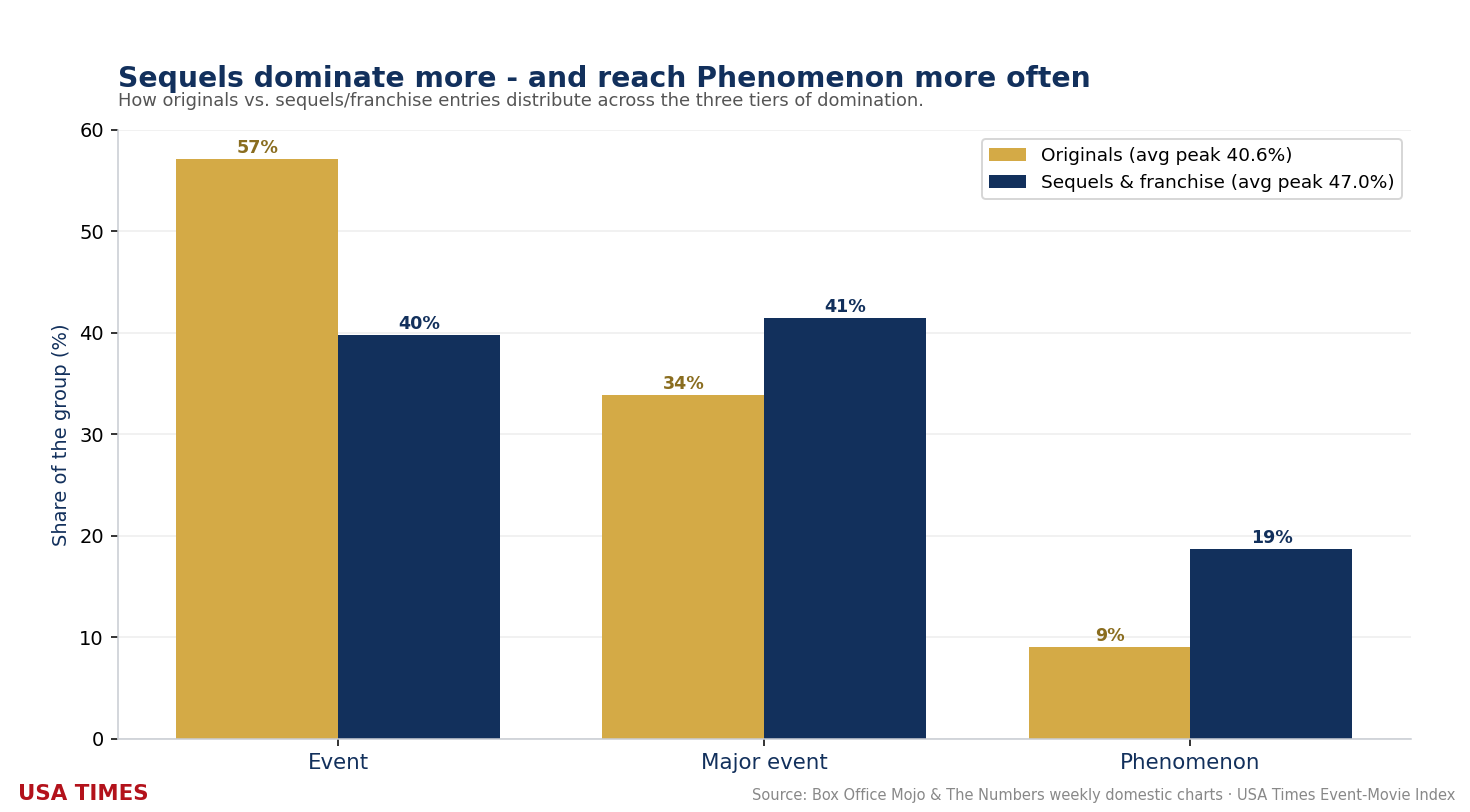
Sequels dominate harder
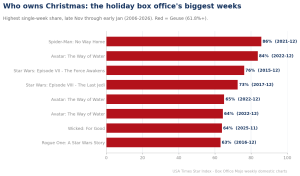
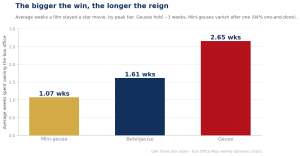
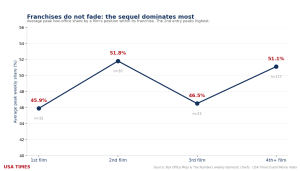
Across twenty years of star movies, sequels and franchise entries reached an average peak share of 47.0% of their week, versus 40.6% for original, standalone films — a gap of more than six percentage points. And the difference widens at the top of the scale: sequels are meaningfully more likely to reach the rarefied Geuse tier, where a single film seizes 61.8% or more of the market. When a movie truly takes over a week, the odds are it is a chapter in a story you already knew.
The reason is not mysterious, and it is not really about creativity. A sequel arrives with something no original can buy at any price: a pre-sold audience. The marketing does not have to explain who these characters are or why you should care; it only has to announce that they are back. That head start translates directly into a bigger opening, a wider release, and — because studios reserve their best dates and most screens for known quantities — a clearer runway. Domination, as we have seen throughout this index, is as much about clearing the field as filling seats, and franchises get first pick of the field.
Batmandir · Founders A numbered seat at the table. S3 · The Founders Club — 161 seats per location. By invitation. Explore membership →The two leaderboards
Most dominant sequels & franchise entries
| Film | Year | Peak share |
|---|---|---|
Avengers: Endgame | 2019 | 88.3% |
| Black Panther: Wakanda Forever | 2022 | 86.1% |
| Spider-Man: No Way Home | 2021 | 85.6% |
| Avatar: The Way of Water | 2022 | 83.7% |
| Avengers: Infinity War | 2018 | 81.3% |
| Avengers: Age of Ultron | 2015 | 80.4% |
Most dominant originals
| Film | Year | Peak share |
|---|---|---|
| Doctor Strange in the Multiverse of Madness | 2022 | 83.3% |
| The Batman | 2022 | 79.8% |
| The Avengers | 2012 | 79.7% |
| A Minecraft Movie | 2025 | 78.7% |
| Jurassic World | 2015 | 75.2% |
| It | 2017 | 73.3% |
The exceptions that keep hope alive
The originals’ leaderboard is the more heartening list, because it proves the ceiling is not closed. A genuinely original film — a first Avatar, an Inception, a Barbie-style cultural event — can still storm to the very top of the box office without a number after its title. These films are rarer, and they have to work harder to manufacture the awareness a sequel inherits for free, but when they connect they dominate as completely as anything. They are the proof that the franchise advantage is a tendency, not a law.
Still, the honest reading of the data is that the deck is tilted. Sequels do not just crowd the release calendar; they win it more decisively when they show up. That is a rational response by studios to real economics, not merely a failure of imagination — but it does help explain the sameness audiences feel. The market rewards the familiar with domination, and domination begets more of the familiar. Breaking that loop takes an original film good enough, and marketed boldly enough, to beat the built-in head start of a sequel. It happens. It is just, by the numbers, the harder road.