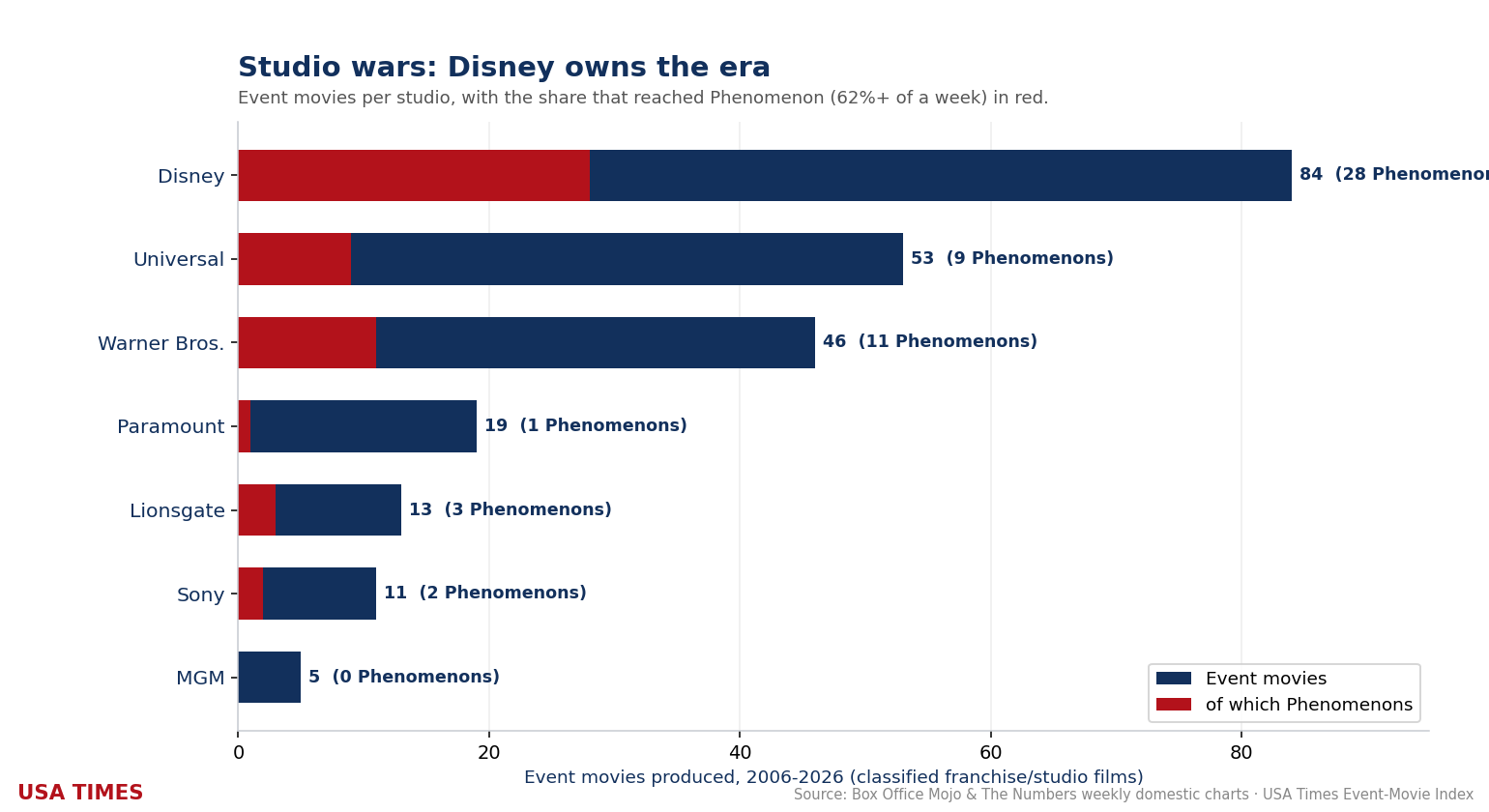
The USA Times index measures films, but films are made by studios — and when you re-sort twenty years of box-office domination by the corporate logo in front of it, one name doesn’t just lead. It laps the field. Disney has not merely won the modern box office; by the measure of how completely its films seize the market, it has annexed it.
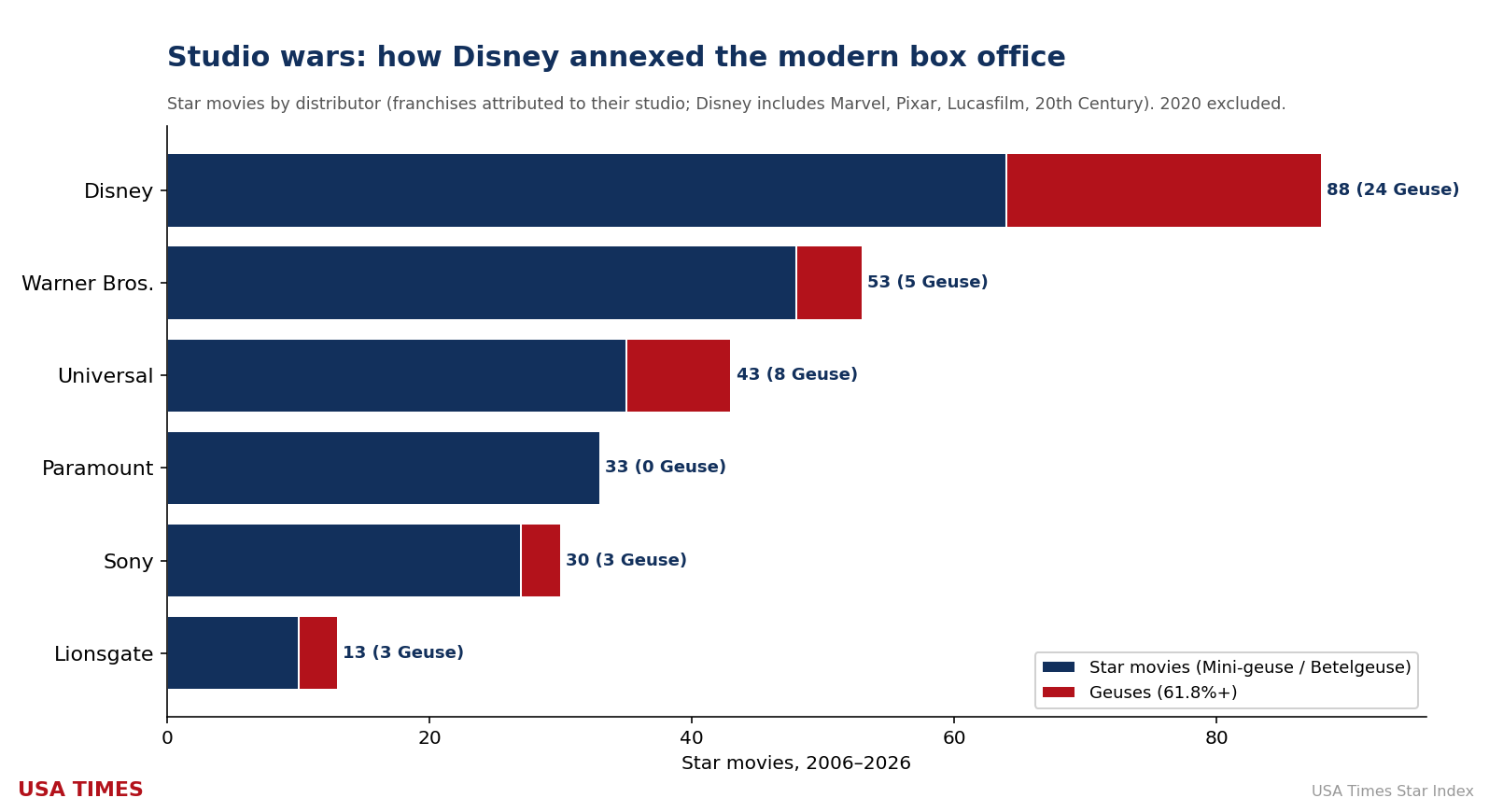
The empire, in one number
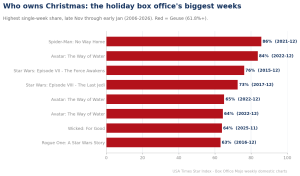
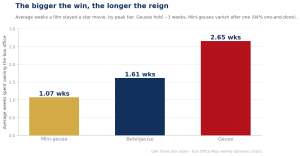
Across the films we could classify by studio, Disney produced 84 star movies — more than the next two studios combined — and, more tellingly, 28 of them reached Geuse level, seizing 61.8% or more of a full week. That is roughly half of every total-domination event in the modern era, from a single company. Its films spent 164 weeks at event level and averaged a peak share of 54.5%, the highest of any major studio. However you slice it, the throne has a mouse on it.
| Studio | Mini-geuse movies | Geuses | Weeks owned | Avg peak |
|---|---|---|---|---|
| Disney | 84 | 28 | 164 | 54.5% |
| Universal | 53 | 9 | 84 | 44.5% |
| Warner Bros. | 46 | 11 | 72 | 49.1% |
| Paramount | 19 | 1 | 26 | 40.7% |
| Lionsgate | 13 | 3 | 19 | 50.6% |
| Sony | 11 | 2 | 15 | 48.1% |
| MGM | 5 | 0 | 6 | 43.3% |
How one company assembled the arsenal
Disney’s domination is not a single franchise but a portfolio of them, acquired and built with almost imperial deliberation. Marvel supplies the superhero juggernauts; Lucasfilm the Star Wars saga; Pixar and Walt Disney Animation the family Geuses; the 20th Century acquisition brought Avatar; and the live-action remakes convert nostalgia into opening weekends. No rival controls anything like this many separate machines for manufacturing a dominant weekend. When we counted the tiers earlier in this series, Disney simply had more entries in every one.
Batmandir · Guest Passes Step inside for a day. Guest passes from $161/day — brought in by a member. See guest passes →The chasing pack tells its own story. Universal leads on sheer volume of the next tier — buoyed by Fast & Furious, Jurassic World, and the Illumination and DreamWorks animation lines — but converts far less often to outright Geuse. Warner Bros. punches hardest per film, with a high average peak driven by DC, the Conjuring horror engine, and prestige swings like Barbie and Dune. Paramount, despite Top Gun: Maverick and Mission: Impossible, has managed just a single Geuse in twenty years — a reminder that a strong slate and total domination are different achievements.
The honest asterisks
Two caveats keep this fair. First, this tally covers the films we could confidently classify by studio — the recognizable franchise and studio titles that drive domination — not every minor one-week Mini-geuse in the index, so treat the absolute counts as a strong sample rather than a perfect census. Second, “domination” is not the same as “profit” or “quality”; Disney’s share crown says how completely its films owned their weeks, not whether each one made money or pleased critics, and the studio has had expensive misfires the index does not punish.
But the shape of the finding survives every caveat. The modern box office is not a level battlefield of studios trading blows; it is one dominant empire and a field of challengers, and the golden-ratio index makes the imbalance impossible to miss. When a single company owns half the total-domination events of an entire era, the interesting question is no longer who is winning. It is whether anyone else can ever again build an arsenal large enough to compete.