We began this series with twenty years of history. We end it with the year still being written. 2026 is only partly complete, but it has already produced enough domination to tell us whether the great trends of the last two decades are continuing, accelerating, or finally bending — and to leave a few questions hanging for the months ahead. Consider this the index looking up from the ledger and out the window.
The year’s giants so far
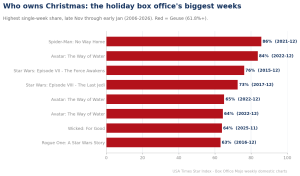
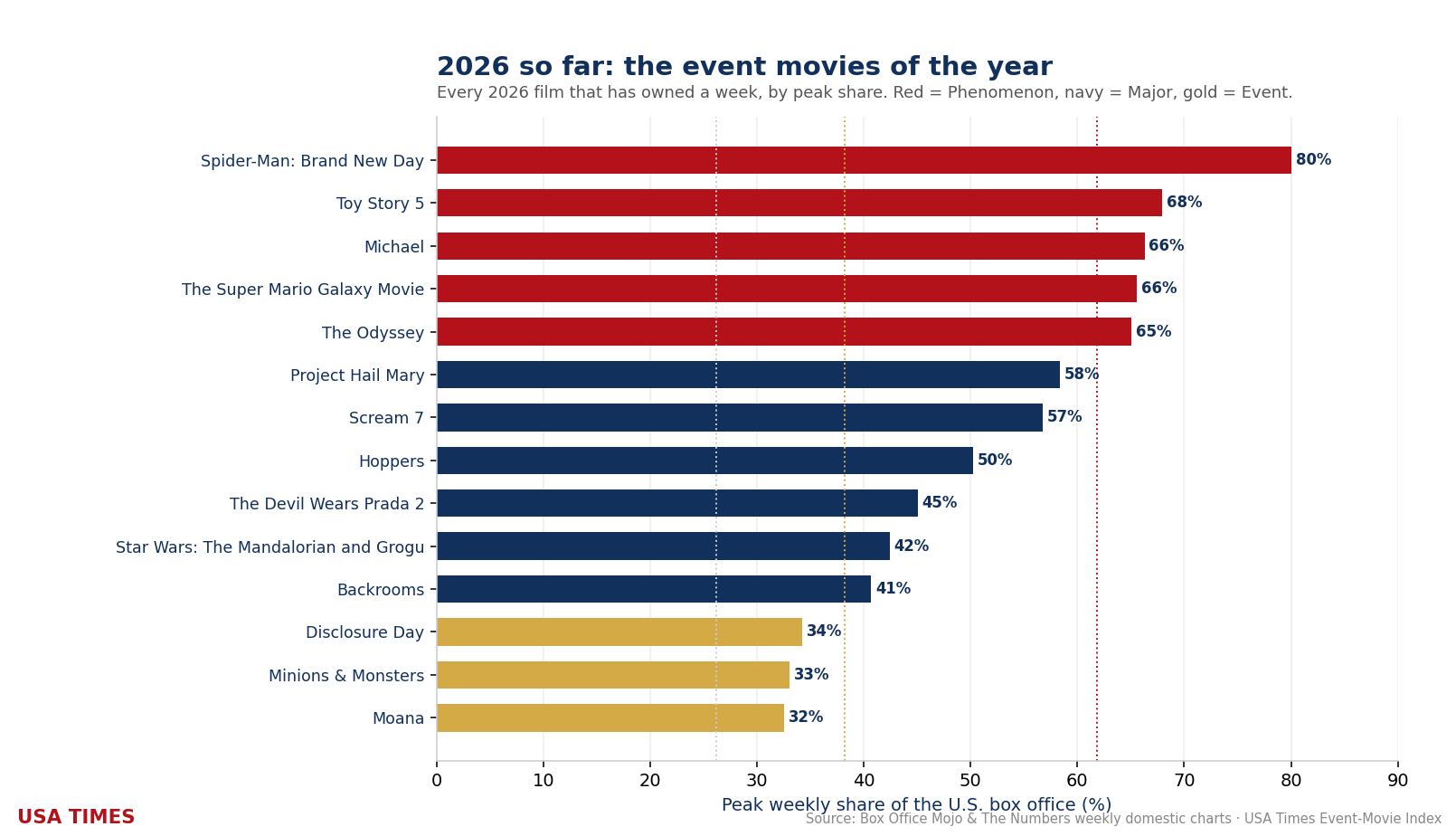
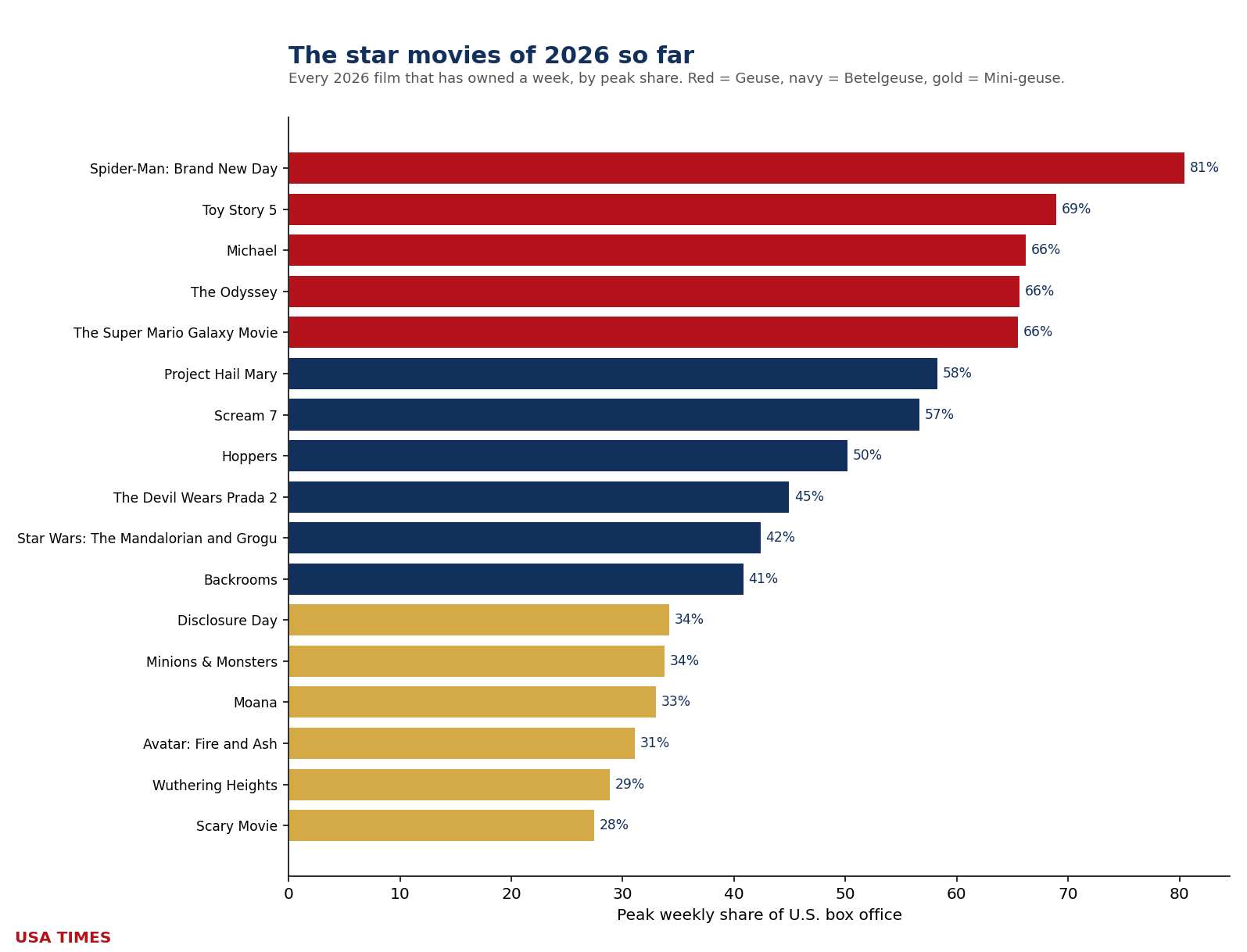
2026 has already crowned 5 Geuses — films that seized 61.8% or more of a full week. Leading them is Spider-Man: Brand New Day, which took roughly 80% of its July week, and Christopher Nolan’s The Odyssey, which held Geuse level across consecutive weeks. Add the animated heavyweights and franchise entries filling out the chart, and the year is on pace to sit comfortably among the most concentrated in the index’s history. The winner-take-all box office is not softening; if anything, 2026 is a vivid continuation of it.
| Film | Tier | Peak share |
|---|---|---|
| Spider-Man: Brand New Day | Geuse | 80% |
| Toy Story 5 | Geuse | 68% |
| Michael | Geuse | 66% |
| The Super Mario Galaxy Movie | Geuse | 66% |
| The Odyssey | Geuse | 65% |
| Project Hail Mary | Betelgeuse | 58% |
| Scream 7 | Betelgeuse | 57% |
| Hoppers | Betelgeuse | 50% |
| The Devil Wears Prada 2 | Betelgeuse | 45% |
| Star Wars: The Mandalorian and Grogu | Betelgeuse | 42% |
The anomaly worth watching
2026 also handed the index its single strangest data point in twenty years. Spider-Man: Brand New Day became the first non-pandemic Geuse to seize a week without an IMAX release — breaking the near-perfect 98% link between total domination and the giant screen that we documented earlier in this series. The reason was almost poetic: every IMAX screen in the country was already booked by The Odyssey. One giant literally crowded the other off the format. It is the kind of exception that tests a rule and, in testing it, reveals exactly how the rule works.
Batmandir · Guest Passes Step inside for a day. Guest passes from $161/day — brought in by a member. See guest passes →What the golden ratio leaves us with
So what has twenty-five articles of golden-ratio box-office analysis actually taught us? A few durable things. That domination has become more common and more extreme, the market emptier beneath a shrinking set of giants. That the films which take over weeks are now almost exclusively sequels and superheroes, drifting ever further from the films that win awards. That a big budget helps less than Hollywood believes, and timing helps more than anyone admits. And that the golden ratio, for all its mystique, earns its keep not as a secret of beauty but as an honest ruler — a fixed line against which a moving, consolidating industry can be measured.
The index does not stop here; it is a living thing, and 2026 will keep filling in. Every week a new film either clears the golden thresholds or falls short, and the record grows. We built the whole apparatus — the tiers, the floor, the billion-dollar stars — so that when the next total eclipse arrives, we can say precisely how complete it was. The box office will keep concentrating, the giants will keep opening into cleared skies, and the golden ratio will keep quietly measuring exactly how much of the light each one blots out. The story is still being written. We will keep counting.