
USA Times Data Desk
The USA Times Data Desk is the newsroom’s data and investigations unit. It collects prices, fees and public records directly from the source, verifies them item by item, and builds the charts and tables behind USA Times investigations. Every figure it publishes is traceable to a named, dated source.
-
Six Studios, Vanishing Middle: Twenty Years of Hollywood Market Share in One Chart
Six studios — Walt Disney, Warner Bros., Universal, Sony Pictures, Paramount, and 20th Century Fox — have combined to take 77% of every dollar the U.S. box office has generated since 1995, according to three decades of data compiled by The Numbers. Disney alone accounts for more than 17% of all box office revenue over…
-
The Premium Ticket Trap: How IMAX and PLF Pricing Is Propping Up a Shrinking Box Office
IMAX alone took a record $1.28 billion in global box office in 2025, up 40% from the year before, and posted its highest-ever share of worldwide box office revenue — about 3.8%, according to the company’s own investor disclosures. That’s a striking number for a single premium format inside a domestic theatrical market that, as…
-
Fewer Movies, Bigger Bets: How Wide Releases Shrank While the Box Office Chased Blockbusters
In 2005, studios put 137 movies into wide release in North America. By 2013, that number had fallen to 121 — and it kept falling, bottoming out at just 55 wide releases in pandemic-disrupted 2020 before partially recovering. Even in 2025’s rebuilt release calendar of 169 wide releases (a number inflated partly by smaller, independent-adjacent…
-
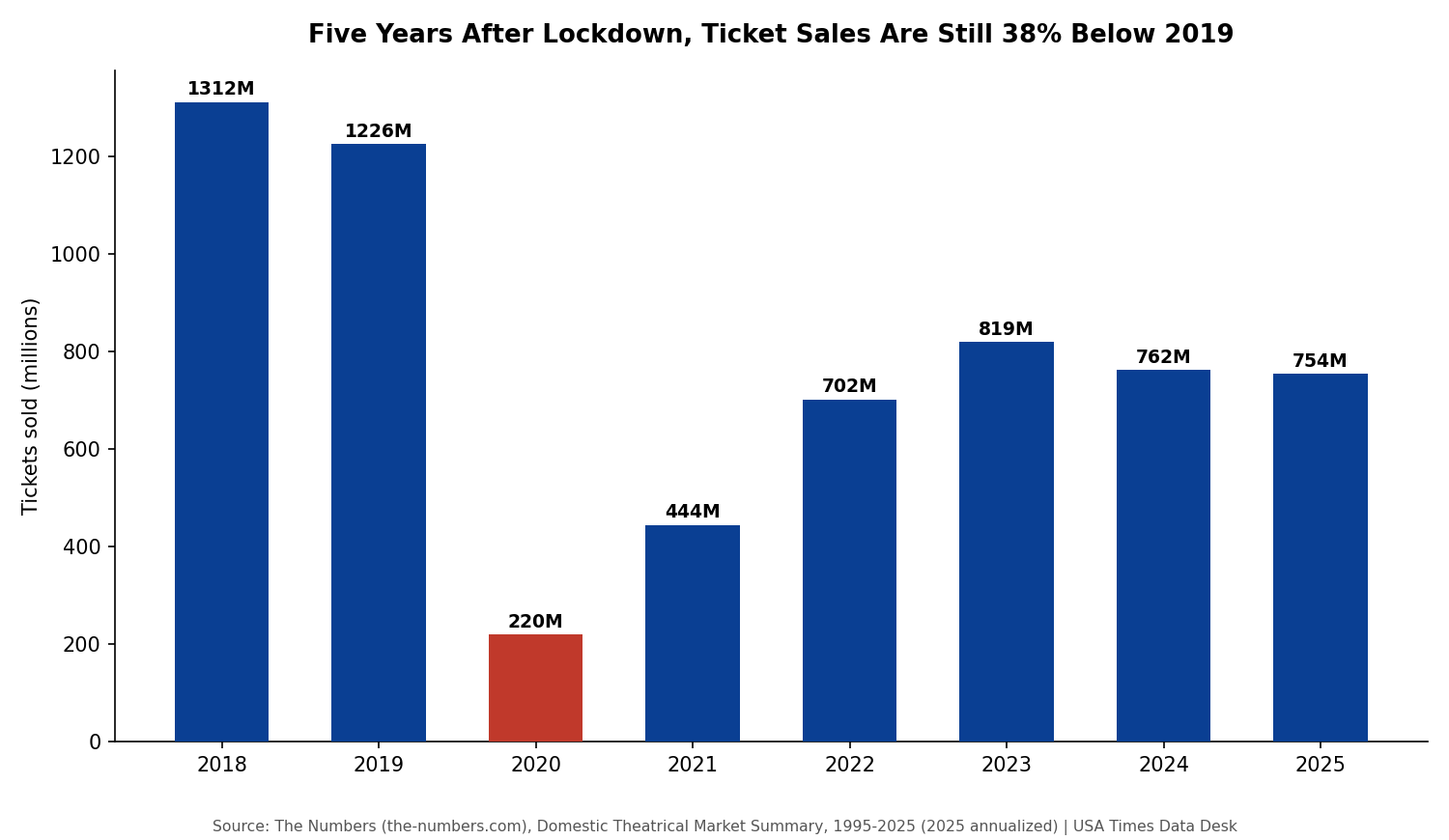
The Pandemic Cut Ticket Sales in Half. Five Years Later, They’re Still Not Back.
Five years after theaters went dark in 2020, U.S. and Canadian admissions remain roughly 38% below where they stood in 2019. That’s not a snapshot from the depths of the shutdown — 2025’s annualized total of about 754 million tickets is a genuine, multi-year recovery from the 220 million tickets sold in 2020’s wipeout year.…
-
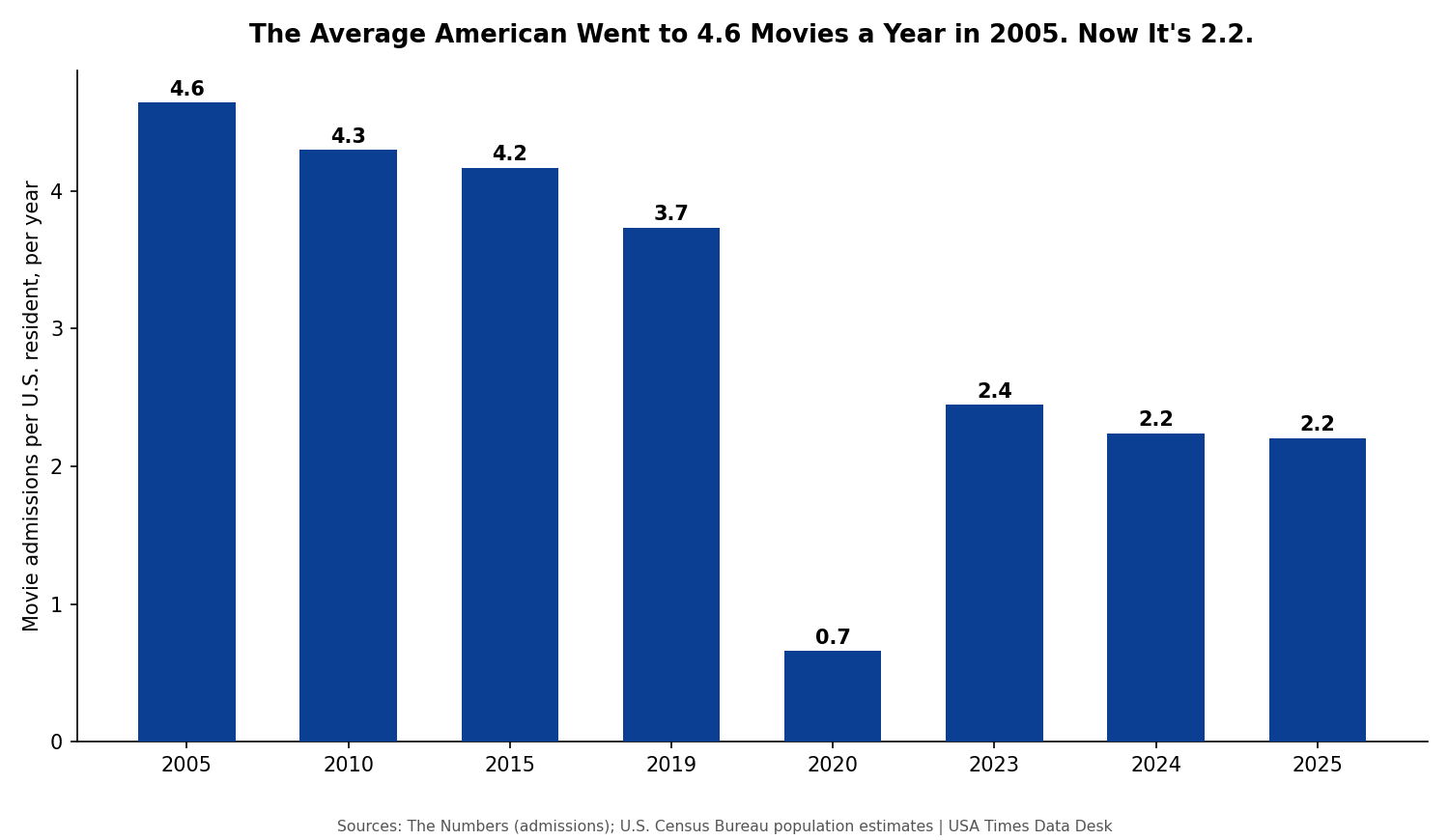
One in Three: How Much of America’s Moviegoing Habit Has Vanished Since 2002
Raw ticket-sales totals already show a steep decline over the past twenty years, but they understate the real story, because the U.S. population grew by roughly 46 million people over that same span. Fewer total tickets sold against a larger population means the actual habit of moviegoing — how often the average American goes to…
-
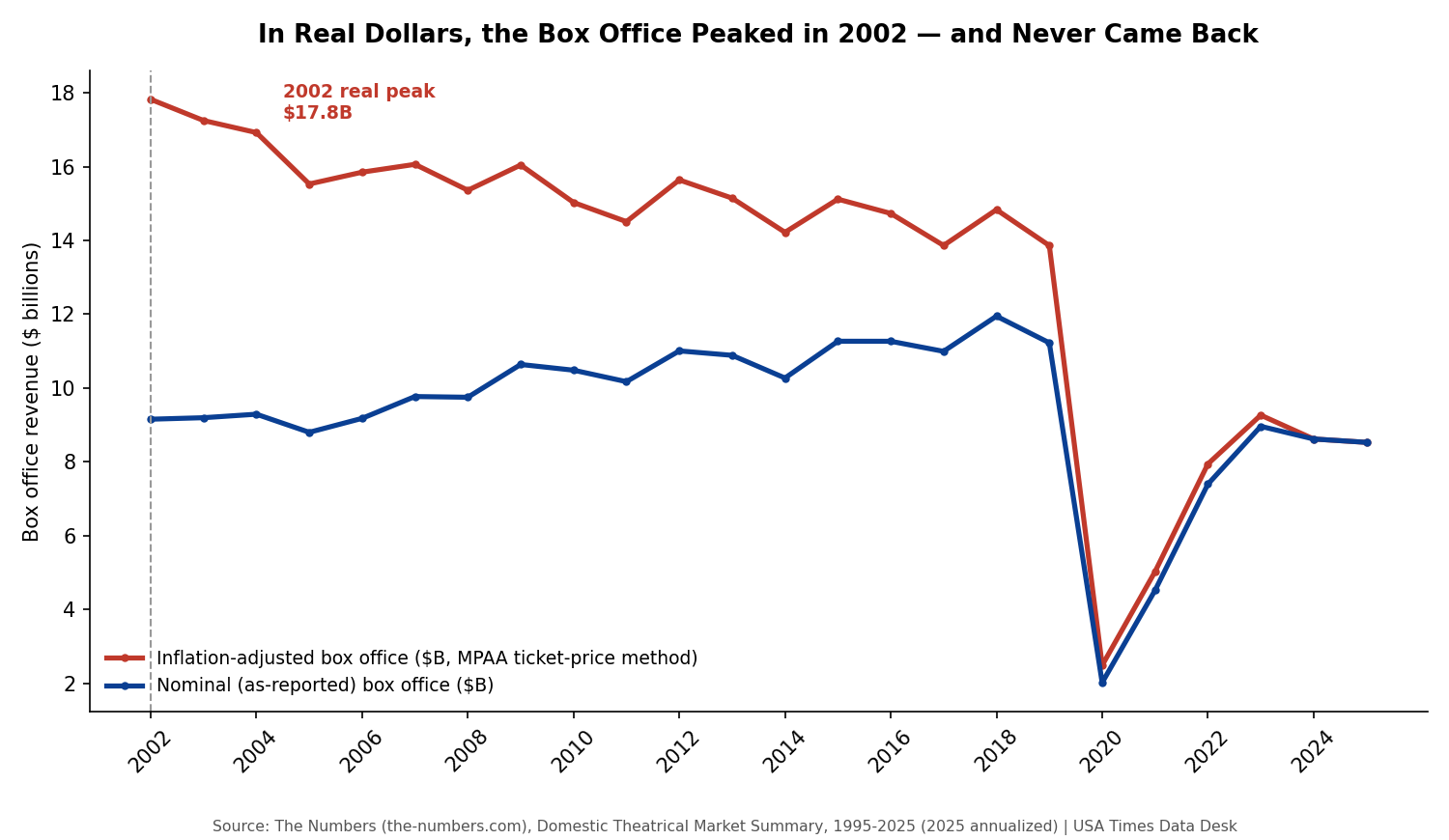
By the Numbers, Hollywood’s ‘Recovery’ Isn’t Real: What Inflation-Adjusted Box Office Reveals
Every year, trade headlines tally the domestic box office and compare it to the year before, sometimes celebrating a “recovery” when the number ticks up. Almost none of those comparisons adjust for inflation. When you do — converting every year’s box office into constant, ticket-price-adjusted dollars using the same methodology the Motion Picture Association uses…
-
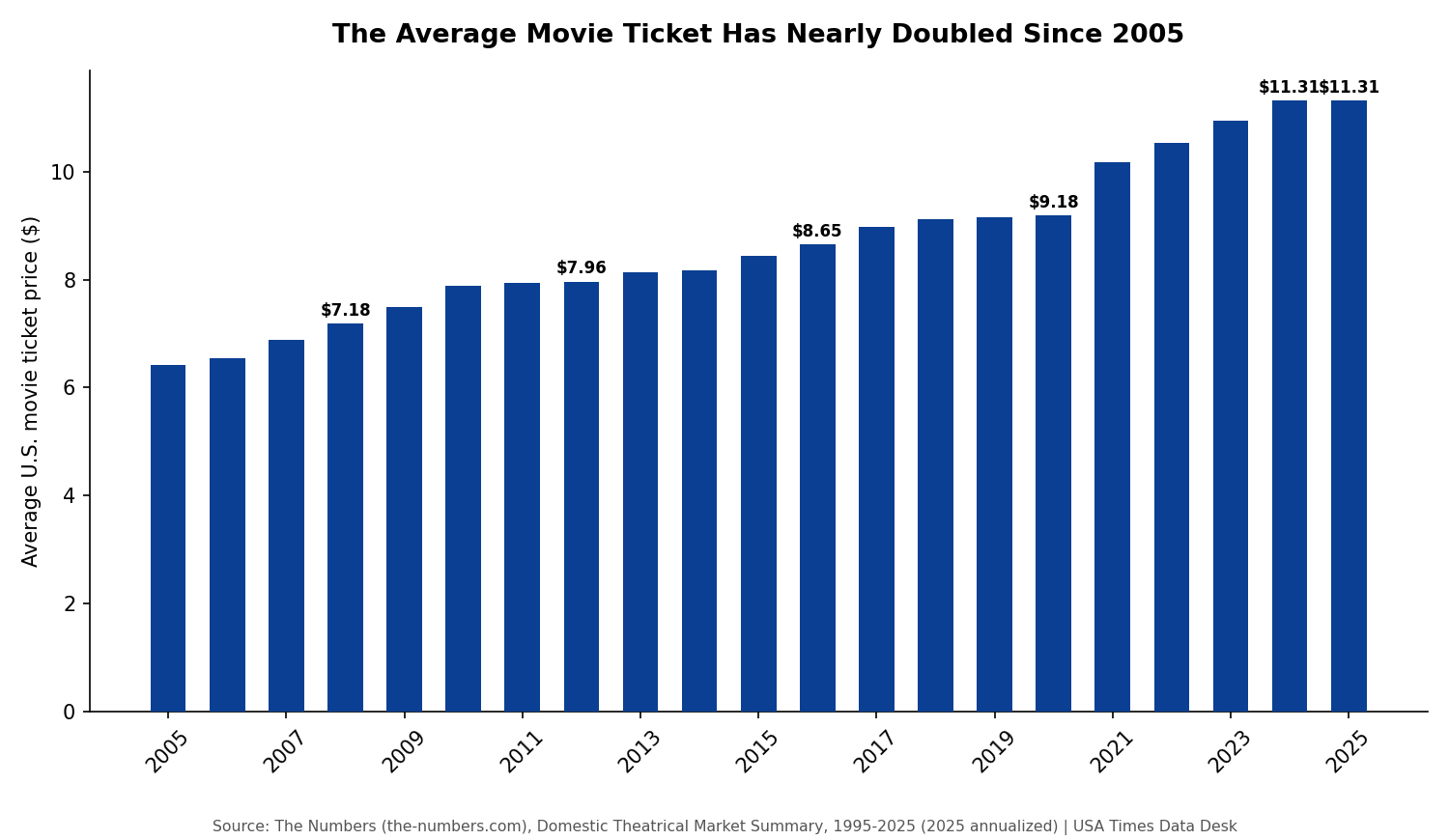
The Movie Ticket Has Outpaced Inflation for Two Decades — Here’s the Math
A movie ticket that cost $6.41 in 2005 would cost about $10.58 today if it had simply tracked general U.S. inflation — the same rate at which the price of groceries, rent, and gasoline has drifted upward, on average, over the past twenty years. Instead, the actual average U.S. movie ticket costs $11.31. Moviegoing hasn’t…
-
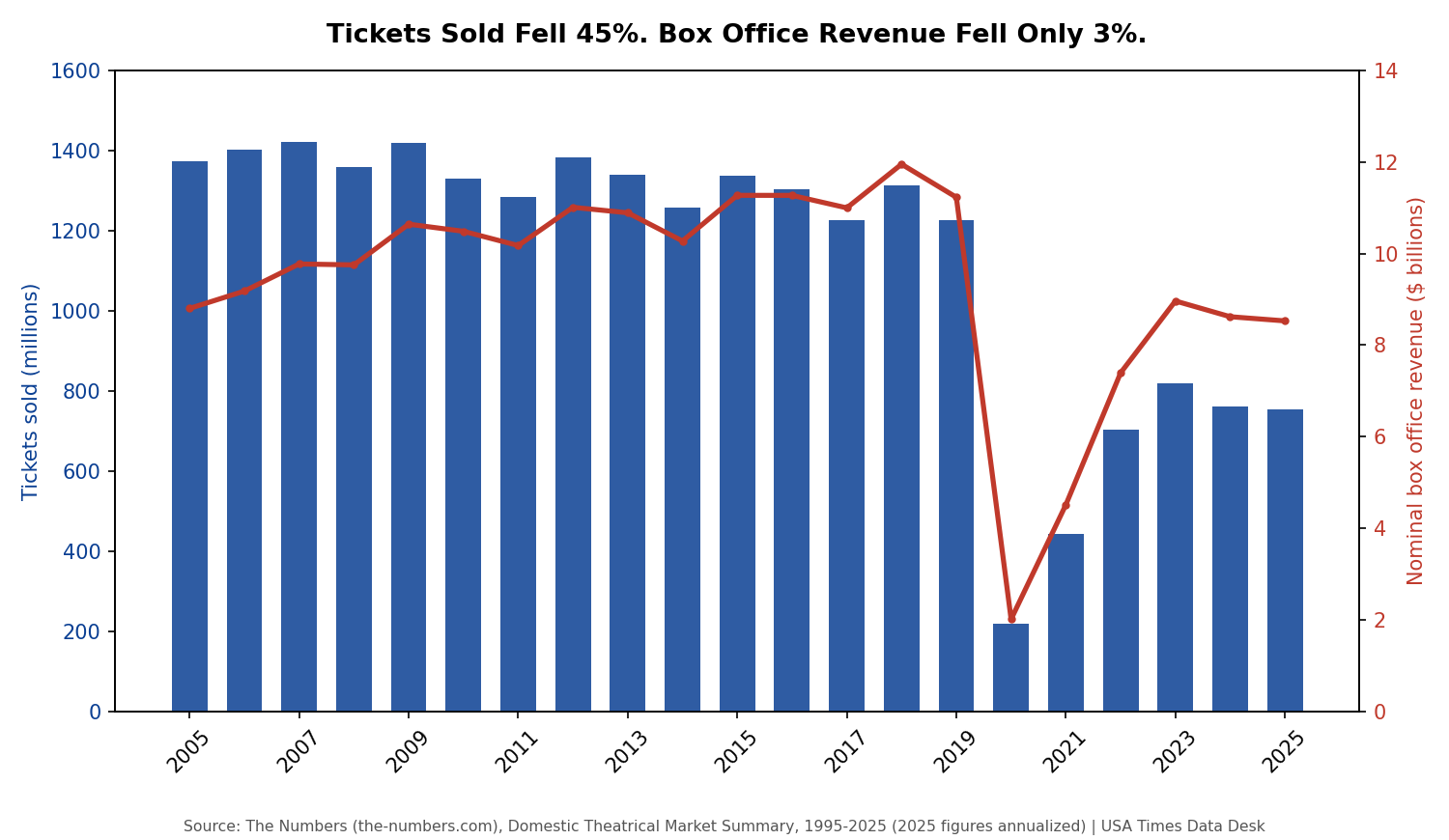
Twenty Years, Half the Crowd: How Box Office Revenue Kept Rising While Ticket Sales Cratered
In 2005, American and Canadian moviegoers bought 1.37 billion tickets and handed theaters $8.8 billion. Twenty years later, in 2025, they bought 754 million tickets — 45% fewer — and handed theaters $8.5 billion, a decline of barely 3%. Two numbers that used to move together, almost in lockstep, have quietly come apart. This is…
-
The FTC Can’t Ban Personalized Pricing. Its New Draft Policy Explains How It Plans to Police It Anyway.
In a draft enforcement policy statement approved 2-0 on Aug. 19, the FTC says undisclosed use of personal data to set individual prices likely violates Section 5 — and its examples name delivery apps, rideshare platforms, grocers, and hotels.
-
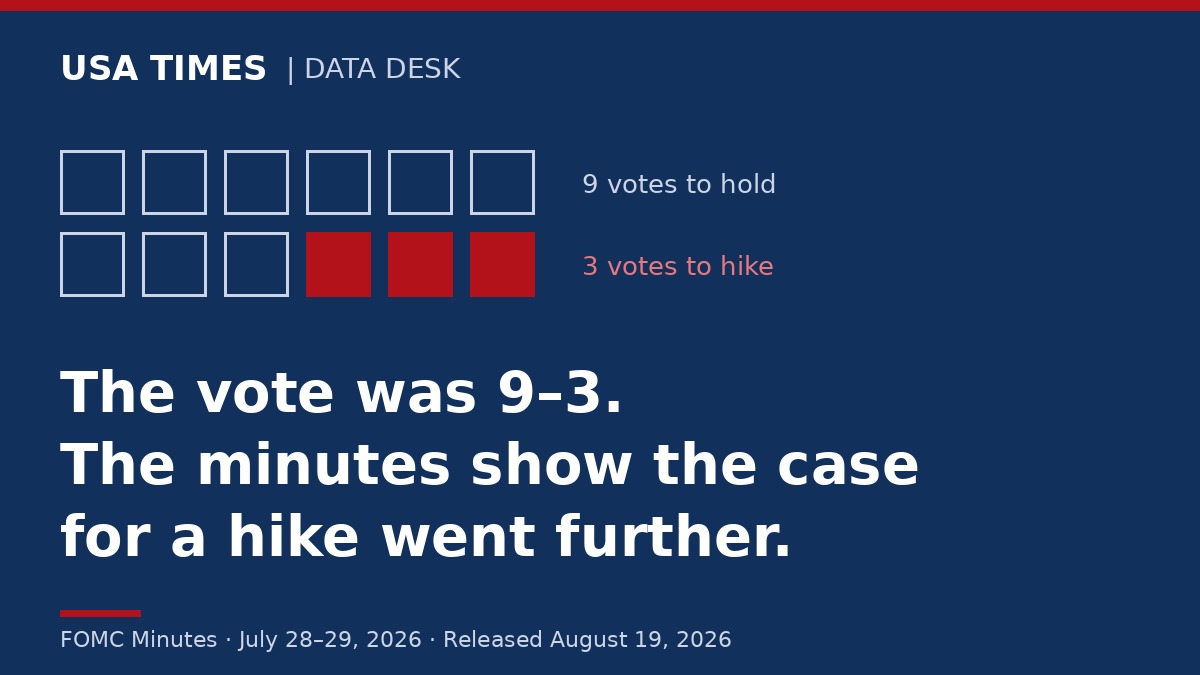
The Fed’s July Vote Was 9–3 to Hold. The Minutes Show the Case for a Hike Went Well Beyond the Dissenters.
“Many participants” said tightening would likely be necessary if inflation didn’t decline, according to minutes of the July 28–29 FOMC meeting released Wednesday — a far broader hawkish camp than the three formal dissents suggested.